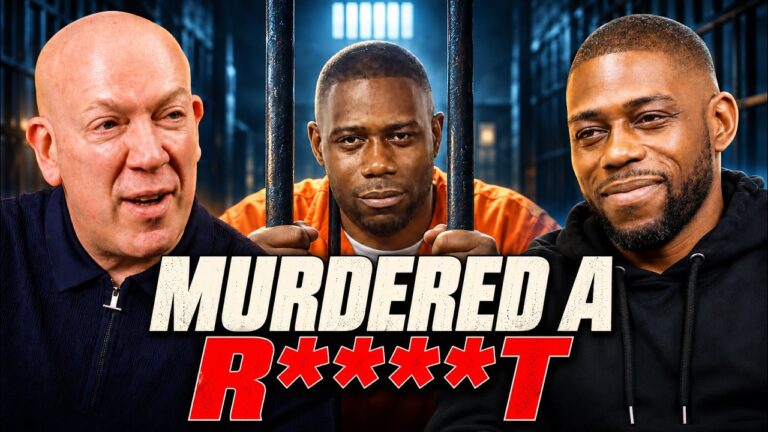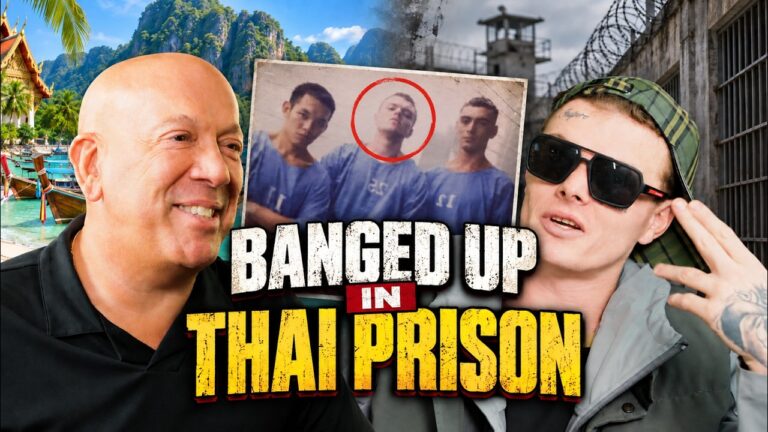

Militant Mills is a name that carries weight, controversy and a story shaped by grief, street life, prison and survival. In a raw and emotional interview on The Terry Stone Connection, she opens up about losing close family members at a young age, falling into violence, being arrested dozens of times and eventually trying to rebuild her life through music.
This is not just a story about crime in London. It is a story about trauma, identity, loss, knife crime, prison and what happens when a young person grows up surrounded by chaos before they are old enough to process it.
For anyone trying to understand the reality behind gang culture, youth violence and life after prison, Militant Mills’ story offers an unfiltered look at how quickly things can spiral, and how difficult it can be to turn things around.
Childhood Trauma Changed Everything
Before violence and arrests became part of her life, Militant Mills says she had a good upbringing. She describes herself as smart, academic and well-behaved as a child. That began to change after devastating losses hit her family in quick succession.
At just 11 years old, she lost her sister to cancer. Within around 18 months, she also lost her mother. That kind of trauma would shake anyone, but for a child, it completely altered the course of her life. She explains that the person she was before those losses and the person she became after them were completely different.
Things worsened further when her father left after her mother died. Her older sisters took custody of her and her brother, but they were still very young themselves and carrying huge responsibility while grieving too. It left Militant Mills angry, vulnerable and emotionally unsupported during the years when she needed stability most.
School Exclusion and the Start of Street Life
School should have been a place of support, but in her case it became another trigger. She says her form tutor told her class that her mother had died, which gave other pupils ammunition to mock her. What followed was a pattern of fights, exclusions and eventually permanent exclusion.
She was moved between schools and alternative education centres, but instead of finding structure, she says she found more chaos. According to her, one of these environments is where “Militant” was created. She began smoking weed, staying out, being reported missing and spending more time on the streets than at home.
This part of her story is important because it highlights a bigger issue in discussions around youth violence in London. Many young people do not simply wake up and choose that path. There is often a build-up of trauma, exclusion, instability and lack of support that pushes them toward risky environments where street culture fills the gap left by family, school or community.
West London, Affiliation and Escalation
As she spent more time in Ladbroke Grove and surrounding parts of West London, Militant Mills became closely associated with people linked to 101 CGM. She describes them as her people and says they were the group she was around every day from her mid-teens.
Her account shows how affiliation can quickly become identity. In those environments, postcode tensions, loyalties and social media exposure can make conflict feel unavoidable. She explains how violence escalates through retaliation. One attack leads to another. One friend gets hurt, then things become personal. The cycle continues.
What comes through strongly in the interview is not glamour, but desensitisation. She speaks openly about becoming used to violence and seeing things that most people would find shocking as normal. That normalisation is one of the most disturbing aspects of the story because it shows how repeated exposure can reshape someone’s sense of danger, consequence and empathy.
Arrests, Weapons and the Road to Prison
Militant Mills says she was arrested 37 times before she turned 18. The charges included assault, robbery, drugs and possession of offensive weapons. She also speaks bluntly about carrying a knife in the past and the mentality that came with living in fear and expecting violence.
Her first custodial sentence came a week after her 18th birthday. She received 12 months for robberies and an offensive weapon, serving part of that before being released on tag. Instead of changing her mindset, she admits that prison at that stage made her feel more established and made things worse.
That detail is striking because it challenges the idea that a short sentence automatically reforms someone. In her case, it added to her sense of status rather than forcing reflection.
Revenge, a Long Sentence and a Turning Point
After her release, more trauma followed. A close friend was murdered, and she describes drinking heavily and being in a bad mental state. She was later set up, attacked, robbed and humiliated in an assault that was filmed and spread online. She then planned a revenge attack.
That case resulted in serious charges including aggravated burglary, GBH, false imprisonment, blackmail and possession of an offensive weapon. She was sentenced to 10 years at 19 years old and served five.
She says she originally expected worse and had been warned she could be facing 16 years. Even so, a 10-year sentence at that age is life-changing. It removed her from the streets, but it also forced her to confront what her life had become.
Prison, Loss and a New Perspective on Knife Crime
One of the most heartbreaking moments in the interview is when she explains that her brother was murdered while she was in custody. She says that was the point where violence stopped being something happening around her and became something that hit her family directly.
That changed how she saw knife crime.
Before that, she says she had become numb to stories of stabbings. After losing her brother, she began to understand the pain from the side of the family, not just the street. She now describes having a strong reaction to knives and speaks about the trauma they carry for her.
This part of the story gives the blog its most powerful message. The reality of knife crime is not just police statistics, headlines or social media clips. It is families losing sons, sisters losing brothers and entire communities carrying the aftermath.
Music, Rehabilitation and Life After Prison
While in prison, Militant Mills began writing music seriously. What started as a creative outlet became a possible future. She says people around her kept telling her she was good, and over time she began to believe it.
Since being released, she has focused more on music and says she now has something to prove. Her first track, Resident Evil, marks a new chapter. She also makes it clear that she is trying to stay away from the life she once lived, cutting off affiliations and refusing to be drawn back into conflict.
That may be the most important part of her story. Change is not clean or easy. It is messy, ongoing and tested constantly. But there is a visible difference between the person she describes from her teenage years and the person speaking now, someone still carrying trauma but trying to channel it into something else.
Why Militant Mills’ Story Matters
Militant Mills’ story matters because it reveals the human reality behind headlines about London gang culture, knife crime and prison. It shows how childhood trauma, school exclusion, street affiliation and grief can combine to create a dangerous path. It also shows that prison alone is not always the answer, and that reflection often comes through pain, loss and time.
Most of all, it is a reminder that behind every arrest number, every court case and every viral clip is a person shaped by experiences many never see.
Her story is hard to hear at times, but that is exactly why it should be heard. It is not comfortable. It is not polished. But it is real.
If you want, I can turn this into a more Terry Stone style blog, a more neutral publisher style feature, or add a punchier SEO headline and meta description.