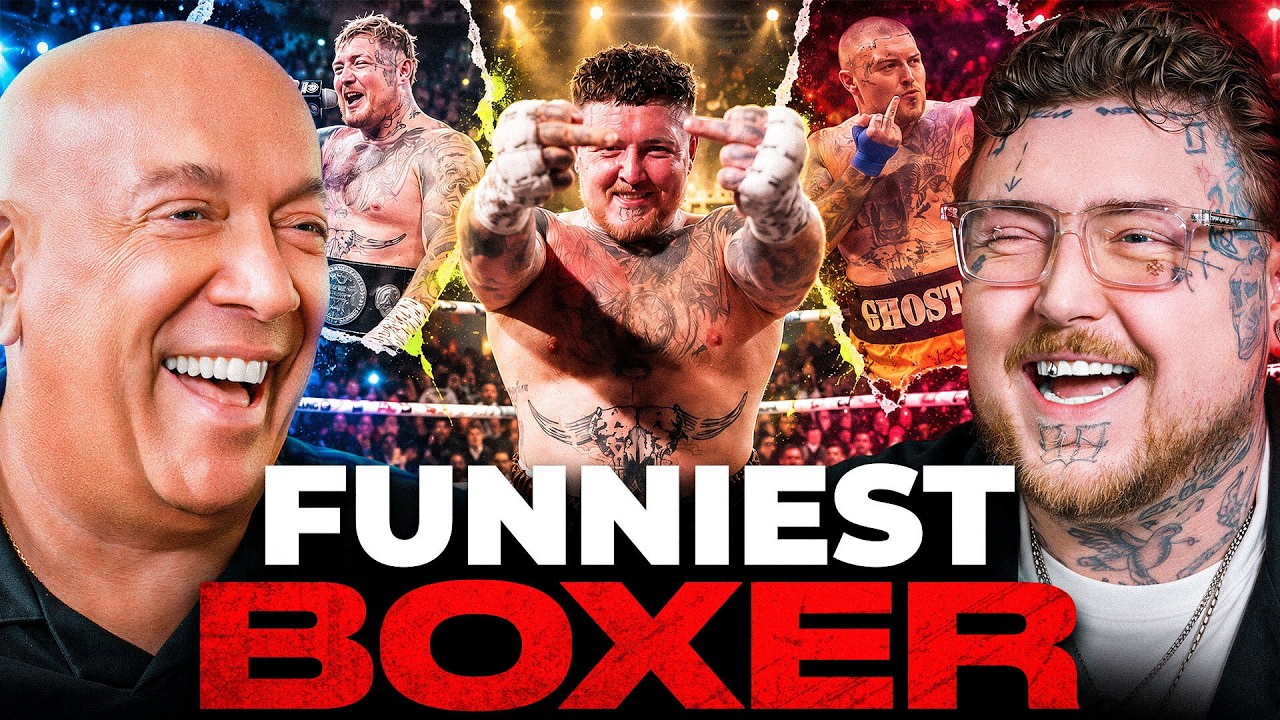
Professional boxing, bare knuckle fighting, a career-changing eye injury and enough extraordinary stories to fill a book. Jay McFarlane, better known in the fight world as “The Ghost”, has lived more in 28 years than most people experience in a lifetime.
Appearing on the Terry Stone Connection podcast, the Glasgow fighter opened up about his childhood, boxing career, battles outside the ring, move into bare knuckle boxing and the injuries that eventually forced him to walk away from fighting.
Behind the humour and larger-than-life personality, however, is a story about wasted potential, second chances and finding a new purpose after losing the sport that had defined his life.
Growing Up in Glasgow
McFarlane grew up around Yoker in Glasgow and describes his childhood as being surrounded by the kind of chaos that quickly became normal to him.
Fighting was a regular part of growing up, but boxing soon provided somewhere for McFarlane to channel his size, reactions and natural ability.
He first walked into a boxing gym at around eight years old. Even at that age, McFarlane was considerably bigger than most children and admits he initially started boxing after struggling with his weight.
His introduction to the sport was hardly gentle.
After being mistaken for an older child, McFarlane was put into sparring with a teenager despite never having worn boxing gloves before. He took a beating, but one moment changed everything.
He managed to make his opponent miss and landed a punch in return.
Something clicked.
From that point onwards, boxing became his life. McFarlane estimates that he competed more than 100 times as an amateur before eventually turning professional.
Becoming a Professional Heavyweight
McFarlane eventually turned professional under Scottish boxing manager Sam Kynoch.
As a young heavyweight with tattoos, a huge personality and an unmistakable Glasgow accent, he immediately stood out. He says he became the youngest professional heavyweight in the UK at the time, with considerable attention surrounding the beginning of his career.
Only three fights into his professional journey, McFarlane was given an opportunity few fighters ever receive.
He fought at Madison Square Garden in New York.
For a young boxer from Glasgow, it should have been the beginning of something huge.
Instead, McFarlane admits that his lifestyle away from boxing prevented him from making the most of his talent.
Alcohol and partying became increasingly intertwined with his professional career. He openly recalls arriving for fights after drinking and believes his lack of discipline stopped him from reaching the level his ability could have allowed.
McFarlane describes himself as someone who could often rely on toughness and natural talent rather than preparation.
It worked for a while.
But eventually, talent alone was not enough.
Fighting Inside and Outside the Ring
Some of the most remarkable moments in McFarlane’s story happened nowhere near a boxing ring.
During the podcast, he recounts several incidents involving alcohol, crime, arrests and serious violence, including an attack in Doncaster that left him with significant injuries to his hand, head and leg.
McFarlane does not present these moments as something to imitate.
Looking back, he repeatedly acknowledges the poor decisions that placed him in dangerous situations and how close some of those decisions came to having permanent consequences.
His lifestyle eventually contributed to a major period of instability in his life. He describes struggling badly with his mental health and eventually seeking professional support.
McFarlane also discusses a psychedelic drug experience that he personally regards as a major turning point. His account is his own experience rather than medical advice, but he says it led him to examine his behaviour, change his environment and begin introducing healthier routines into his life.
It would not be the end of his problems, but it marked the beginning of a different way of thinking.
Losing His Sight and His Boxing Career
Perhaps the biggest turning point came through something McFarlane had always relied upon: fighting.
After suffering problems with his right eye, McFarlane underwent multiple procedures in an attempt to restore enough vision to continue competing.
Eventually, the British Boxing Board of Control would no longer license him to box.
For somebody whose identity had revolved around the sport since childhood, it was devastating timing. McFarlane had finally managed a lengthy period of sobriety and was attempting to rebuild his boxing career when the opportunity was taken away.
Rather than walking away from combat sports completely, he moved into bare knuckle boxing.
McFarlane went on to headline what he describes as the first professional bare knuckle event in Scotland.
But his fighting career would ultimately end because of his eyesight.
During a later bare knuckle fight, McFarlane was struck around his functioning eye. His vision gradually disappeared during the opening round until he could see little more than shadows.
The fight was stopped.
For one of the toughest men in the ring, McFarlane admits the experience terrified him. More importantly, it meant accepting that his career as a fighter was over.
From Fighter to Boxing Coach
McFarlane could no longer fight, but he still had years of boxing knowledge.
That has led to the next stage of his life.
Today, he is moving into coaching and wants to build a stable of fighters in Glasgow, passing on both his technical knowledge and the lessons learned from his own mistakes.
In many ways, his experience makes him uniquely qualified.
He knows what natural talent can achieve, but he also knows exactly what happens when that talent is not backed by discipline.
McFarlane describes himself as an example of the famous idea that hard work will eventually beat talent when talent refuses to work hard.
Now, he wants younger fighters to avoid making the same mistakes.
Rather than simply teaching combinations, movement and the tricks picked up throughout his professional career, McFarlane wants to help fighters understand the opportunities in front of them and make the most of them.
No Regrets and a New Chapter
Despite everything that has happened, McFarlane says he would change very little.
There are injuries he wishes he could undo, particularly the damage to his eyesight, but he does not want to erase the experiences that created the person he is today.
Boxing took him from Glasgow to Madison Square Garden. Bare knuckle fighting gave him another chapter after professional boxing ended. Now coaching, storytelling and even acting could provide the next one.
McFarlane says he lived his dream, even if he did it “one mistake at a time”.
That might be the best summary of his story.
The career did not unfold perfectly. There were missed opportunities, dangerous decisions and consequences that can never be reversed.
But at 28, Jay McFarlane’s story is far from finished.
And if his appearance on the Terry Stone Connection proves anything, it is that “The Ghost” still has plenty of stories left to tell.