
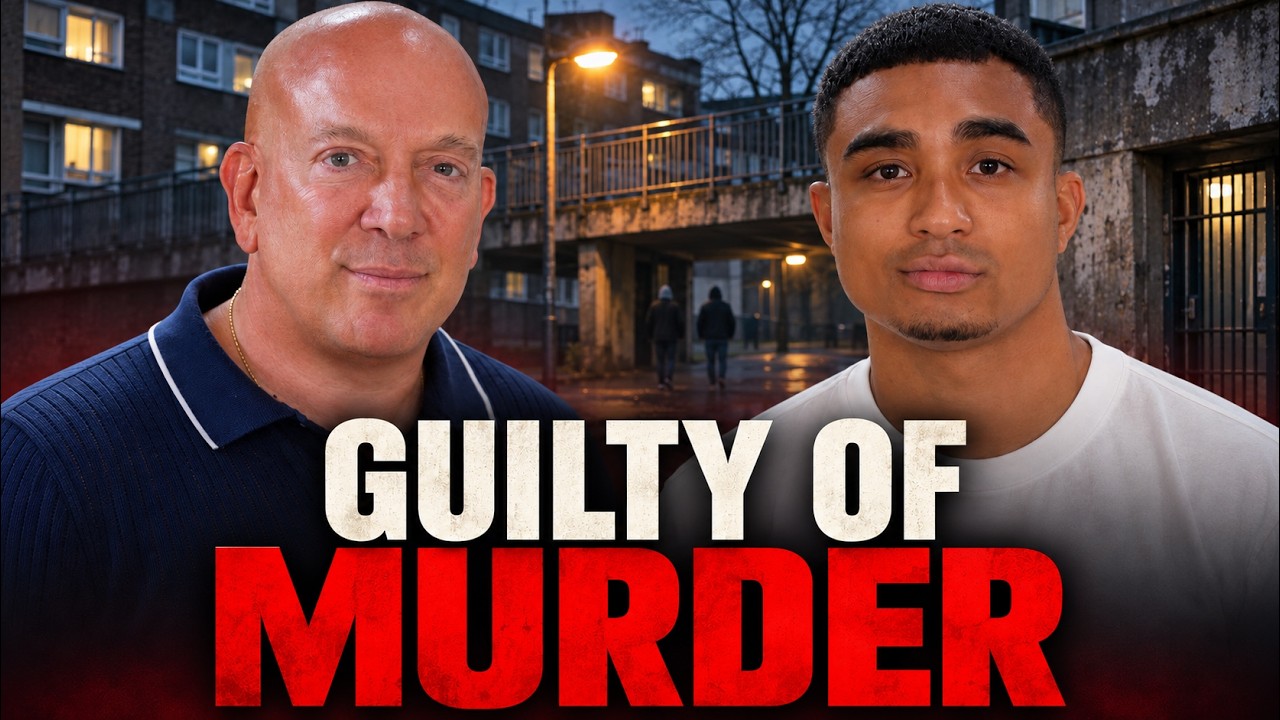
At just 15 years old, Cliche’s life changed forever when he became involved in a violent confrontation in South London that resulted in a teenager losing his life. Although he maintains that he never carried out the fatal stabbing, he was convicted of murder under joint enterprise law and received a life sentence.
After spending 12 years behind bars, Cliche has since built a career in music, become an advocate for criminal justice reform and dedicated himself to educating young people about the realities of gang life.
In this episode of the Terry Stone Connection, Cliche sits down with Terry Stone to share his extraordinary journey, discussing his childhood in South East London, the events leading to his conviction, his experiences in prison and his determination to create a better future.
Growing Up in Lewisham and Getting Involved in Gang Life
Born in Lewisham in 1994, Cliche grew up in Grove Park, South East London, with his Ghanaian father and Japanese mother.
Despite eventually becoming involved in gang activity, his childhood was initially centred around education and sport. Academically gifted and encouraged by his mother to study, Cliche passed his 11-plus examination and secured a place at a grammar school in Sidcup.
However, moving between two very different environments created challenges.
At school, he struggled to fit in with classmates from different backgrounds. Back home, he found a sense of belonging among friends in Grove Park.
Cliche explains how these feelings of isolation and his search for identity gradually drew him towards the SG gang.
After a close friend was attacked, he became involved in an ongoing rivalry with another group. What initially felt like loyalty and protection would eventually lead to devastating consequences.
The Fatal Confrontation in Sydenham
On 5 May 2010, Cliche was just 15 years old when he received a phone call explaining that two of his friends had been confronted outside their school.
Angered by what had happened, Cliche and several others travelled to Sydenham to confront the rival group.
Still wearing their school uniforms, the teenagers had initially planned a physical confrontation. However, tensions quickly escalated when they encountered a larger group.
During the chase through a local park, weapons were dropped on the ground. Cliche recalls picking up a knife, which he says was for his own protection.
The confrontation continued, with members of both groups running in different directions. During the chaos, one teenager was fatally stabbed.
Cliche maintains that he was elsewhere in the park when the stabbing occurred and did not realise somebody had been killed until he watched the news later that evening.
A week later, he was arrested.
What Is Joint Enterprise and Why Was Cliche Convicted?
One of the central subjects of Cliche’s conversation with Terry Stone is joint enterprise law.
Joint enterprise is a legal principle that can allow multiple individuals to be held criminally responsible for an offence, even when they did not personally carry out the act.
The law is particularly controversial in cases involving group violence, where questions arise over each individual’s intentions and involvement.
Cliche’s trial began at the Old Bailey in January 2011.
By March, seven defendants had been convicted. Four received manslaughter convictions, while three, including Cliche, were convicted of murder.
Despite maintaining that he did not stab the victim, Cliche received a life sentence with a 12-year minimum term.
He explains that the prosecution’s evidence concerning his possession of a knife played a significant role in his conviction.
For Cliche, the experience raised serious questions about fairness, individual responsibility and how joint enterprise is applied.
His case would eventually become the driving force behind his involvement in criminal justice reform.
Spending 12 Years Behind Bars
Following his conviction at 16, Cliche entered the prison system, initially spending time in young offender institutions before moving into adult prisons.
During the interview, he describes prison as an environment where violence, intimidation and constant pressure were part of everyday life.
He recalls how younger prisoners would fight over seemingly insignificant disagreements, while violence in adult prisons could have far more serious consequences.
One particularly disturbing experience occurred at HMP Liverpool, where Cliche witnessed the aftermath of a prisoner being seriously attacked over a dispute involving a mobile phone.
Beyond the violence, he explains how prison affected his understanding of time, relationships and loyalty.
As the years passed, visits became less frequent, letters stopped arriving and friends continued with their lives outside.
It was a painful realisation that the people he once believed would always be there could not put their own lives on hold.
For young people attracted to gang culture, Cliche believes this is one of the most important realities to understand.
Becoming a Viral Rap Artist While in Prison
Despite the challenges of imprisonment, Cliche discovered an unexpected passion for creating music.
Having enjoyed rap from a young age, he began writing lyrics as a way of expressing his emotions, frustrations and experiences.
Music became an outlet for the anger and injustice he felt surrounding his conviction.
During the COVID-19 lockdowns, while serving his sentence at HMP The Mount, Cliche began recording music videos using an unauthorised mobile phone.
Concealing his identity by covering his face, he released a freestyle video online that quickly attracted attention.
The video went viral, eventually reaching approximately 1.6 million views on YouTube.
Even prison officers recognised him despite his attempts to remain anonymous.
What began as a creative escape developed into a serious musical ambition, providing Cliche with an opportunity to build an audience before his release.
Life After Prison and Campaigning for Joint Enterprise Reform
After leaving prison, Cliche faced the difficult process of rebuilding his life.
He initially struggled to find his direction before securing a job as a barista in a café in Dalston.
Alongside developing his music career, he became increasingly involved in public speaking, youth education and criminal justice reform.
Today, Cliche visits schools to speak directly with teenagers about gang involvement, knife crime and the consequences of criminal activity.
He particularly focuses on pupils in Years 10 and 11, recognising these as crucial ages when young people can be vulnerable to negative influences.
Cliche also discusses his involvement in a parliamentary commission examining joint enterprise, working alongside MPs and other professionals to gather evidence and advocate for changes to the law.
Although reform would not undo the years he has already served, he hopes his efforts will help prevent others from experiencing similar circumstances.
Why Cliche Wants Young People to Hear His Story
Throughout the conversation, Cliche repeatedly challenges the glamorous image of street life.
He explains how younger generations can be influenced by money, status and the appearance of loyalty, without understanding the long-term consequences.
In his experience, the reality of prison is very different from the lifestyle often presented in music and social media.
He also acknowledges how modern platforms can amplify violence, turning serious incidents into viral content.
By sharing his experiences openly, Cliche hopes young people will think carefully about the decisions they make and the company they keep.
What’s Next for Cliche?
Looking ahead, Cliche remains committed to his music and campaigning work, but he also has ambitions to explore presenting, documentaries and other opportunities in entertainment.
He believes his past should not define what he is capable of achieving in the future.
His journey demonstrates how education, creativity and determination can help people find a new direction, even after experiencing enormous setbacks.
Watch the full episode of the Terry Stone Connection to hear Cliche’s remarkable story in his own words, including the events surrounding his conviction, life inside prison and his ongoing campaign for joint enterprise reform.
Don’t forget to like, comment and subscribe for more real-life stories and exclusive interviews with Terry Stone.