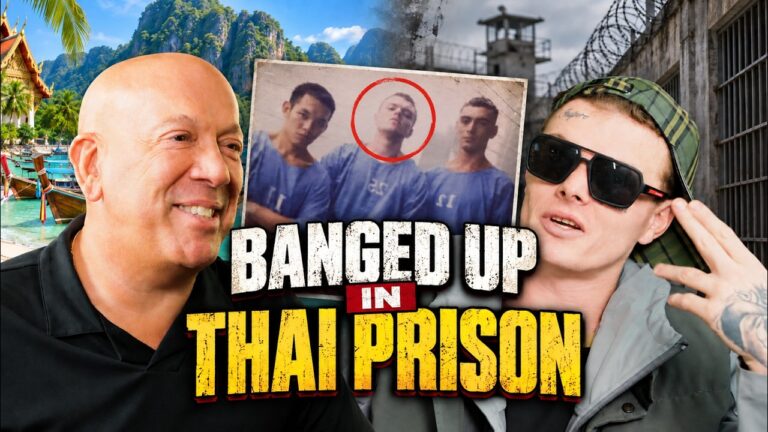

Paul Venis, often known as “Venice the Menace,” has lived a life that most people only hear about in films or documentaries. From a difficult childhood in the North East of England to addiction, crime, prison and eventually a successful career in combat sports, his story is one of chaos, resilience and transformation.
Today, Venis speaks openly about his past, his recovery from addiction, and the lessons he learned along the way. His journey shows how quickly life can spiral out of control, but also how change is always possible.
Growing Up in Middlesbrough
Paul Venis was born and raised in South Bank, Middlesbrough, a tough working-class area where reputation often meant everything. Like many kids growing up in similar environments, he faced bullying and struggled with confidence during his early years.
He remembers being picked on for how he looked. With bright ginger hair, different coloured eyes, and a larger build than many other children, he stood out, and not always in a positive way. Those experiences left deep emotional scars.
Despite having supportive parents, Venis often felt uncomfortable in his own skin. Even as a child he experienced negative thoughts and feelings that he later recognised as early signs of mental health struggles.
At the time, he thought these feelings were normal. Looking back now, he understands that they were not.
The Incident That Changed Everything
One childhood incident had a lasting impact on Venis’ mindset.
While playing with friends using catapults near a secluded bridge, a man confronted the group. Venis’ friends ran away, leaving him alone. The man violently attacked him, beating him so badly that he was hospitalised.
For weeks he hid the truth from his father, claiming he had fallen from a wall. When he finally told the real story, the reaction from his father was emotional and intense.
That moment stayed with him for the rest of his life.
It also changed how he viewed fear.
From that point on, Venis became determined never to appear weak again. Instead of feeling frightened, he began to channel anger and aggression.
Discovering Boxing and Confidence
During the transition from primary school to secondary school, Venis’ father took him to a boxing gym. What began as a way to build confidence quickly became something more significant.
Training in boxing helped him develop:
- Self-confidence
- Physical discipline
- The ability to defend himself
Within a short period, the bullying stopped.
But the new confidence also brought a darker side. Venis admits that he sometimes took things too far, developing a reputation as someone not to be messed with.
As he grew older, fighting and reputation became part of his identity.
A Promising Future in Football
Before combat sports fully took over his life, Venis was actually a talented footballer.
He played for local teams and even had opportunities linked to the Middlesbrough football academy system. Scholarships and potential overseas opportunities were on the horizon.
However, teenage life took a different direction.
By the age of 16, Venis was already becoming known for fighting and street reputation rather than sport. At the same time, he became a father at a very young age.
Responsibility, pressure and the desire to provide money pushed him towards the wrong crowd.
Falling Into Crime and Addiction
As Venis entered his late teens, he became involved in:
- Drug dealing
- Underground fighting
- White collar boxing events
- Local criminal activity
At the same time, his addiction escalated rapidly.
He describes being “flat out in addiction”, using drugs constantly and losing track of time. Cocaine and other substances became a daily part of life.
His reputation in the streets grew, and with it came danger.
At one point his house was shot at, and conflicts with other criminals escalated.
Eventually, paranoia and fear pushed him towards an extreme decision.
The Rampage and Arrest
After discovering an imitation firearm, Venis made a reckless decision that would change everything.
Believing people were coming after him, he went on a three-day rampage where he:
- Robbed properties
- Threatened people with the imitation firearm
- Searched for those he believed had attacked his home
Police eventually caught up with him, and he was arrested by armed response officers.
He was charged with possession of an imitation firearm with intent to cause fear, along with several related offences.
The result was a five-year prison sentence.
Life Inside Prison
Entering prison was a shock.
Like many people who had never been incarcerated before, Venis expected constant violence and confrontation. Instead, he found that prison life could become routine and even comfortable for some inmates.
That realisation frightened him.
He saw people who had become accustomed to prison, individuals who committed crimes simply to return.
For Venis, the reality of being separated from his family hit hardest. Visits from his children reminded him of what he was losing.
During this time he began questioning the path his life had taken.
Overcoming Addiction and Finding Faith
While in prison, Venis began exploring spirituality and recovery.
He started reading about religion and eventually developed a strong interest in Christianity. At the same time, he joined a 12-step recovery programme, similar to those used by organisations like Narcotics Anonymous.
Through recovery meetings and self-reflection, he began understanding his addictive behaviour.
Venis believes that some people are wired with addictive tendencies, a mindset where once they start something, they struggle to stop.
The programme gave him tools to manage that.
Daily routines became essential to maintaining recovery, including:
- Writing gratitude lists
- Prayer and meditation
- Physical training
- Honest self-reflection
These habits helped him rebuild his life after prison.
Returning to Normal Life
After his release, Venis faced another challenge: adjusting to normal society.
He lived temporarily in a hostel and struggled with the temptation to relapse. Eventually, he committed fully to recovery and began rebuilding his life step by step.
For the first time, he took a regular job at a Tesco warehouse.
The job was humble and the pay was small, but it represented something important, stability.
Around the same time, he joined a local martial arts gym.
That decision would change his life again.
Becoming a Professional K1 Fighter
At the gym, Venis discovered K1 kickboxing, a brutal combat sport that combines boxing with powerful leg kicks and knees.
Initially he trained simply to stay fit. However, coaches quickly noticed his natural ability and toughness.
Within a short time he began fighting competitively.
Venis went on to build an impressive K1 career, eventually achieving a 32-0 record and winning multiple titles, including:
- British titles
- European titles
- International belts
Despite his success, his criminal record prevented him from competing internationally in some of the biggest promotions.
Still, the sport gave him something invaluable: discipline.
Injuries and the End of Fighting
Later in his career, Venis transitioned into bare-knuckle boxing, including fights under major promotions.
However, years of fighting took a toll on his body.
Medical scans eventually revealed multiple bulging discs in his neck, nerve damage and early arthritis. Doctors warned that continuing to fight could risk permanent paralysis.
With a young family, including a daughter with autism, Venis made the difficult decision to step away from professional competition.
Life After Fighting
Today, Paul Venis focuses on several projects:
- Running a martial arts gym
- Personal training and fitness coaching
- Speaking about addiction recovery
- Raising awareness for autism
Together with his wife, he also founded Vienna’s Voice, a community initiative supporting autistic children and their families.
Through social media and public appearances, he shares his story in the hope of helping others avoid the mistakes he made.
Lessons From Paul Venis’ Journey
Paul Venis’ life shows how quickly things can spiral when addiction, ego and reputation take control. But it also demonstrates the power of change.
His key message is simple:
Rock bottom does not have to be the end.
With discipline, support and honesty, it is possible to rebuild a life — no matter how far someone has fallen.
For Venis, that journey is still ongoing. But today, instead of chasing reputation, he is focused on something far more important.
Family, recovery and helping others.