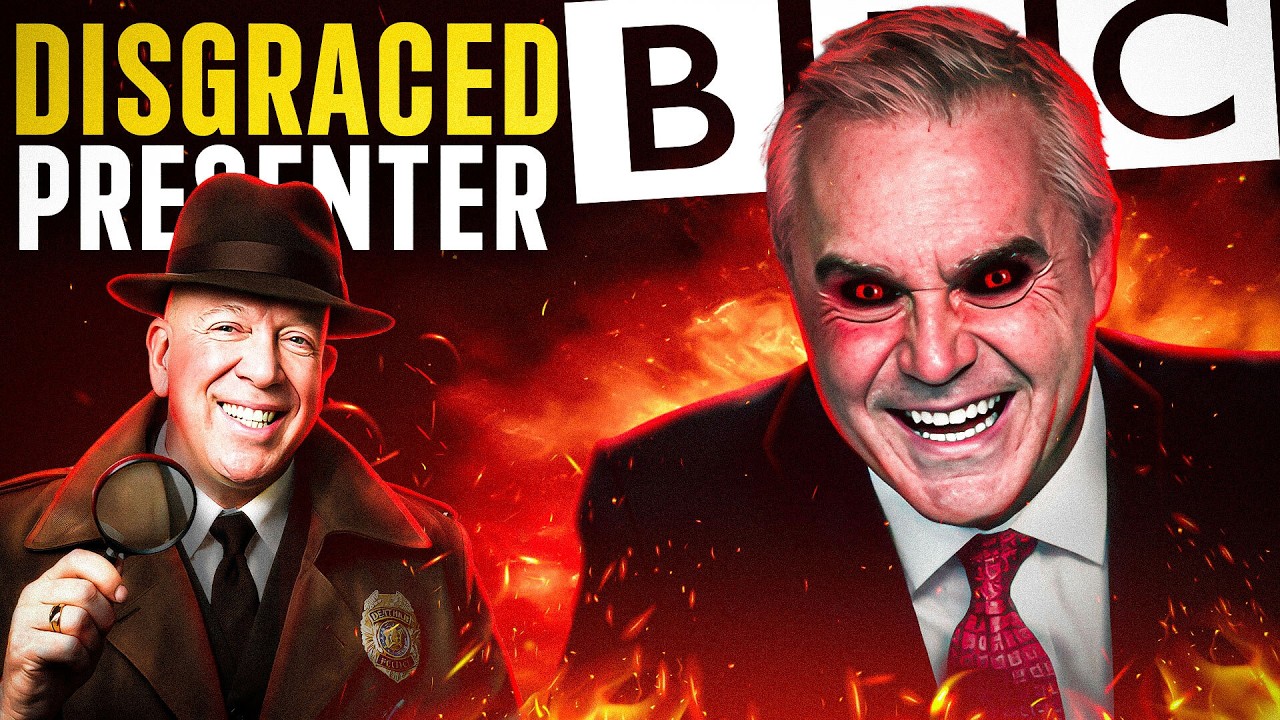
For decades, Huw Edwards was not just a news presenter. In many ways, he was the news. His voice carried Britain through elections, royal weddings, national tragedies, and some of the most historic moments in modern British history. When the country needed calm, authoritative reporting, the BBC turned to him.
But in a stunning and deeply unsettling turn of events, the man who spent forty years building one of the most respected careers in British broadcasting saw that reputation collapse almost overnight. Allegations, investigations, criminal charges, and a guilty plea would ultimately bring down a career that once seemed untouchable.
This is the full story behind the rise and downfall of Huw Edwards, one of the BBC’s most recognisable figures.
The Welsh Boy Who Built a Broadcasting Career
Huw Edwards was born in Bridgend, Wales, in August 1951. Growing up in a politically engaged household, he developed an early interest in current affairs and public life. Unlike many high profile broadcasters who arrive through glamorous routes, Edwards built his career the traditional way, through persistence, patience, and years of learning the craft.
He began in local radio and regional television, gradually gaining experience before joining the BBC in the mid 1980s. Initially working as a trainee, Edwards spent his early years fetching scripts, rewriting copy, and observing how the newsroom operated behind the scenes.
Those formative years proved critical. By the 1990s, Edwards had established himself as a serious political journalist covering Westminster and Welsh politics. Editors trusted him with complex and sensitive stories because he demonstrated reliability, professionalism, and a calm presence under pressure.
Eventually, that trust paid off.
His move into national news broadcasting would transform his career.
Becoming the Face of BBC News
The breakthrough moment came when Edwards joined the BBC Six O’Clock News, one of the corporation’s flagship bulletins. It placed him in front of a national audience and showcased the qualities that would soon define his public image.
His delivery was measured and authoritative. He projected credibility without theatrics, something that viewers often look for in serious journalism.
In January 2003, Edwards reached the summit of British broadcasting when he became the presenter of BBC News at Ten, the most prestigious news role within the organisation. The chair behind that desk carries enormous responsibility. It is reserved for journalists the BBC believes can represent the institution itself.
For the next two decades, Huw Edwards sat in that chair night after night.
He became the steady voice guiding viewers through the biggest events of the era.
The Voice of Historic National Moments
During his tenure at BBC News at Ten, Edwards reported on countless historic events that shaped the United Kingdom.
He delivered coverage of major general elections, moments when the country waited anxiously to discover who would lead the government. He also fronted coverage of national crises, royal ceremonies, and global breaking news.
However, the moment that many viewers remember most came in September 2022, when Edwards announced the death of Queen Elizabeth II.
Millions of people watched as he calmly delivered the historic news that the Queen had died peacefully at Balmoral. The moment demanded professionalism, sensitivity, and composure, qualities Edwards had built his career upon.
At that time, he was widely regarded as the BBC’s most trusted news anchor.
Which is why the events that followed shocked the public so profoundly.
July 2023: The Scandal That Shook the BBC
In July 2023, a tabloid story erupted that would trigger one of the BBC’s most damaging scandals in recent years.
The report alleged that a well known BBC presenter had paid a young person for explicit images. Although the initial story did not name the individual, speculation quickly spread across social media and news outlets.
Within hours, numerous BBC presenters were being discussed online.
The BBC responded by suspending Huw Edwards while police reviewed the allegations. The corporation entered crisis mode as journalists and the public searched for answers.
Five days later, Edwards’ wife, Vicky Flind, released a statement confirming that the unnamed presenter was her husband. She explained that Edwards had been hospitalised due to severe mental health issues and acute depression.
The statement asked the public and media to respect the family’s privacy.
At the time, police stated they had found no evidence of criminal offences linked to the original allegations, leaving the situation clouded by confusion and speculation.
But the story was far from over.
A Year of Silence and Growing Questions
After the initial scandal broke, Huw Edwards disappeared from television completely.
His chair at BBC News at Ten was filled by other presenters, while the broadcaster remained absent from public life. Despite the lack of updates, rumours and speculation continued to circulate throughout 2023 and early 2024.
Part of the controversy centred on claims from a teenager’s parents who alleged their child had received money from Edwards in exchange for explicit images. The situation became complicated when the young person involved later issued a statement through a lawyer saying that no illegal activity had taken place.
Two conflicting accounts left the public uncertain about what had actually happened.
Meanwhile, the BBC faced growing scrutiny over how it was handling the situation internally.
Huw Edwards Resigns from the BBC
In April 2024, the BBC announced that Huw Edwards had formally resigned from the corporation, citing medical advice.
After more than four decades working within the BBC, his departure was marked by a brief statement rather than a public farewell. For a man who had once been the voice of national moments, the end of his broadcasting career arrived quietly.
Many observers assumed that the resignation would mark the end of the story.
In reality, it was only the beginning of the most serious developments.
Arrest, Charges and the Criminal Case
Later in 2024, the situation escalated dramatically when authorities revealed details of a criminal investigation involving Edwards.
The case centred on a WhatsApp conversation between Edwards and another adult man in his twenties. According to evidence presented in court, explicit images had been exchanged over a long period, with Edwards sending significant sums of money to the individual.
Investigators later discovered that some of the images in question crossed a legal threshold and were considered illegal indecent images of children.
This discovery transformed the situation from a media scandal into a criminal prosecution.
The Guilty Plea That Ended a Career
On 31 July 2024, Huw Edwards appeared in court and pleaded guilty to three charges relating to indecent images of children.
The moment marked the definitive collapse of his reputation.
For forty years, Edwards had been the journalist trusted to report the truth to the public. Now he stood in a courtroom admitting to criminal offences that fundamentally contradicted the image he had presented throughout his career.
The contrast between public trust and private actions shocked audiences across the UK.
Sentencing and the Collapse of Public Trust
On 16 September 2024, the court delivered its sentence.
Edwards received a six month prison sentence suspended for two years. He was also placed on the sex offenders register for seven years and ordered to complete a treatment programme.
The judge acknowledged Edwards’ serious mental health struggles and noted that he did not pose an ongoing risk to the public. His guilty plea and cooperation with authorities were also considered during sentencing.
Nevertheless, the damage to his reputation was irreversible.
The BBC moved quickly to distance itself from the scandal. Archived appearances were removed from certain platforms and official statements addressed the situation.
For many viewers, however, the damage extended beyond the individual.
The Wider Questions Facing the BBC
Whenever a high profile BBC figure becomes involved in a major scandal, attention inevitably turns toward the organisation itself.
Observers began asking familiar questions. How much did the BBC know about the situation? Were there warning signs? Could anything have been handled differently?
These questions carry particular weight because the broadcaster has faced past controversies involving misconduct by high profile figures.
Public trust in institutions depends heavily on accountability, transparency, and a willingness to confront uncomfortable truths.
The Huw Edwards case once again forced the BBC to examine its internal culture and safeguarding procedures.
A Scandal That Continues to Echo
In the modern media landscape, scandals rarely disappear quietly. Instead, they often resurface through documentaries, investigations, and dramatisations.
By 2026, Edwards’ downfall had already become the subject of television adaptations and news retrospectives examining how such a trusted public figure could fall so dramatically.
For viewers who watched him deliver historic national announcements, the contrast is still difficult to reconcile.
The man who once informed the nation of the Queen’s death now represents one of the most dramatic collapses in British broadcasting history.
A Warning About Power, Trust and Familiar Faces
The story of Huw Edwards is not simply about a single individual. It also highlights broader questions about power, trust, and public perception.
When someone becomes a familiar face in people’s homes, audiences often assume credibility and integrity without question. Over time, that trust can become deeply embedded.
But as this case demonstrates, familiarity does not guarantee transparency.
The rise and fall of Huw Edwards stands as a reminder that reputations built over decades can collapse in an instant when private actions contradict public trust.