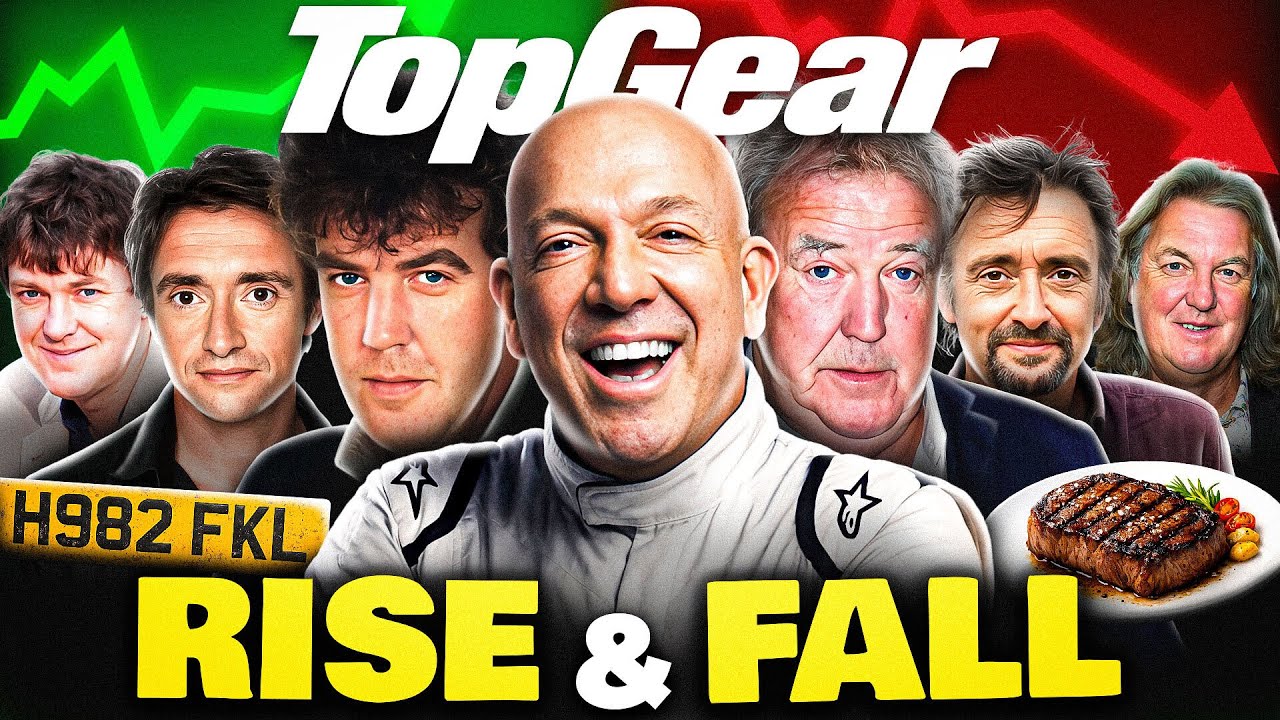
For more than a decade, Top Gear was not just a motoring programme. It became one of the most successful television shows in the world and a defining part of British pop culture. Sunday nights revolved around it. Families gathered around the television, ready to watch explosions, supercars, arguments, and the unpredictable chemistry between three presenters who seemed perfectly matched for chaos.
At its peak, Top Gear was broadcast in more than 200 countries and watched by hundreds of millions of viewers. It turned a simple car show into a global entertainment phenomenon.
But despite its enormous success, the show’s most famous era ended suddenly in 2015 after years of controversy and one final incident behind closed doors.
The Trio That Made Top Gear
The modern success of Top Gear was built around three presenters whose personalities carried the entire programme.
Jeremy Clarkson was the loud, provocative centre of the show. Known for his strong opinions and willingness to say things others would not, he understood how to create memorable television moments.
Richard Hammond brought enthusiasm and energy. Often acting as the audience’s voice, he balanced Clarkson’s boldness with excitement and humour.
James May completed the trio with a slower, more thoughtful style. His calm and methodical personality provided contrast to the chaos around him.
Together, the three created a dynamic that felt genuine rather than scripted. They mocked each other relentlessly, sabotaged one another during challenges, and argued constantly. Yet underneath the jokes was clear friendship, and that authenticity became the show’s biggest strength.
Why Top Gear Became a Global Hit
On the surface, Top Gear followed a straightforward formula. Episodes combined car reviews, celebrity interviews, studio discussions, and timed laps around the famous test track.
However, the cars were rarely the real focus.
Instead, the programme centred around the presenters themselves. Their rivalry, humour, and unpredictable behaviour turned even simple segments into entertainment.
Challenges became a key part of the format. The presenters were often given a limited budget to buy unusual vehicles or complete ridiculous journeys. These tasks regularly spiralled into chaos as mechanical failures, bad planning, and sabotage between presenters caused everything to go wrong.
That unpredictability made the show addictive. Viewers were not just watching cars. They were watching personalities clash.
The Iconic Top Gear Specials
Some of the most memorable episodes were the international specials filmed in places such as Vietnam, Botswana, Bolivia, and Burma.
These episodes sent Clarkson, Hammond, and May on long journeys through extreme environments in unsuitable vehicles. Cheap motorcycles crossed entire countries, unreliable cars climbed mountain roads, and broken engines stranded the presenters far from help.
Unlike studio segments, these trips often involved real exhaustion, frustration, and danger. The presenters were forced to rely on each other while navigating difficult terrain and unpredictable situations.
The result felt authentic and adventurous. These specials became some of the most popular episodes in the show’s history and helped cement Top Gear’s reputation worldwide.
Controversy and Criticism
Despite its popularity, Top Gear regularly attracted criticism.
The presenters often used humour that many viewers considered politically incorrect. Complaints were sent to the BBC and broadcasting regulators on numerous occasions. Various groups claimed they had been offended by jokes or comments made on air.
For many years, the BBC largely tolerated the controversy because the show’s ratings and international sales were extremely strong. Top Gear had become one of the broadcaster’s most valuable programmes.
However, by the mid 2010s the situation had begun to change.
Several incidents, including controversial comments during episodes and investigations by Ofcom, placed increasing pressure on the programme and its presenters.
The Patagonia Controversy
One of the most serious incidents occurred during filming of the 2014 Patagonia special in Argentina.
A Porsche used during the trip had a number plate that appeared to reference the Falklands War, a conflict that remains sensitive in Argentina. Local protests escalated quickly, with angry crowds confronting the production team.
Vehicles were attacked and the crew were eventually forced to abandon filming and leave the country under police escort.
Although the BBC stated that the number plate reference was accidental, the incident created international headlines and increased pressure on the show.
The Incident That Ended the Show
The end of Top Gear’s most famous era came in March 2015 after filming in North Yorkshire.
Following a long day of production, Jeremy Clarkson became involved in an argument with producer Oisin Tymon about food arrangements at a hotel. During the confrontation, Clarkson struck the producer.
The BBC immediately suspended Clarkson and launched an internal investigation.
Shortly afterwards, the broadcaster announced that Clarkson’s contract would not be renewed, effectively ending his role on the programme.
The End of the Original Top Gear
The decision shocked fans and triggered a massive public reaction. A petition supporting Clarkson gained hundreds of thousands of signatures.
However, Clarkson’s departure also led to the end of the famous presenting trio. James May and Richard Hammond made it clear that the show worked because of the three of them together.
Without Clarkson, the original Top Gear format could not continue in the same way.
Life After Top Gear
The BBC attempted to relaunch the programme with new presenters, but it struggled to capture the same global attention.
Meanwhile Clarkson, Hammond, and May quickly signed a major deal with Amazon to create a new series called The Grand Tour.
Although the format changed slightly, the new show kept the same chemistry that had made Top Gear so successful.
The Legacy of Top Gear
Looking back, the Clarkson era of Top Gear remains one of the most influential television shows of the 21st century.
It transformed a traditional motoring programme into a worldwide entertainment brand and turned its presenters into household names.
More importantly, it demonstrated that great television often comes from personality rather than format. The success of Top Gear was built on three very different individuals whose chemistry could not easily be recreated.
Even today, years after its collapse, the original trio’s era of Top Gear remains the benchmark for motoring television and a reminder of what happens when the right people come together at exactly the right time.