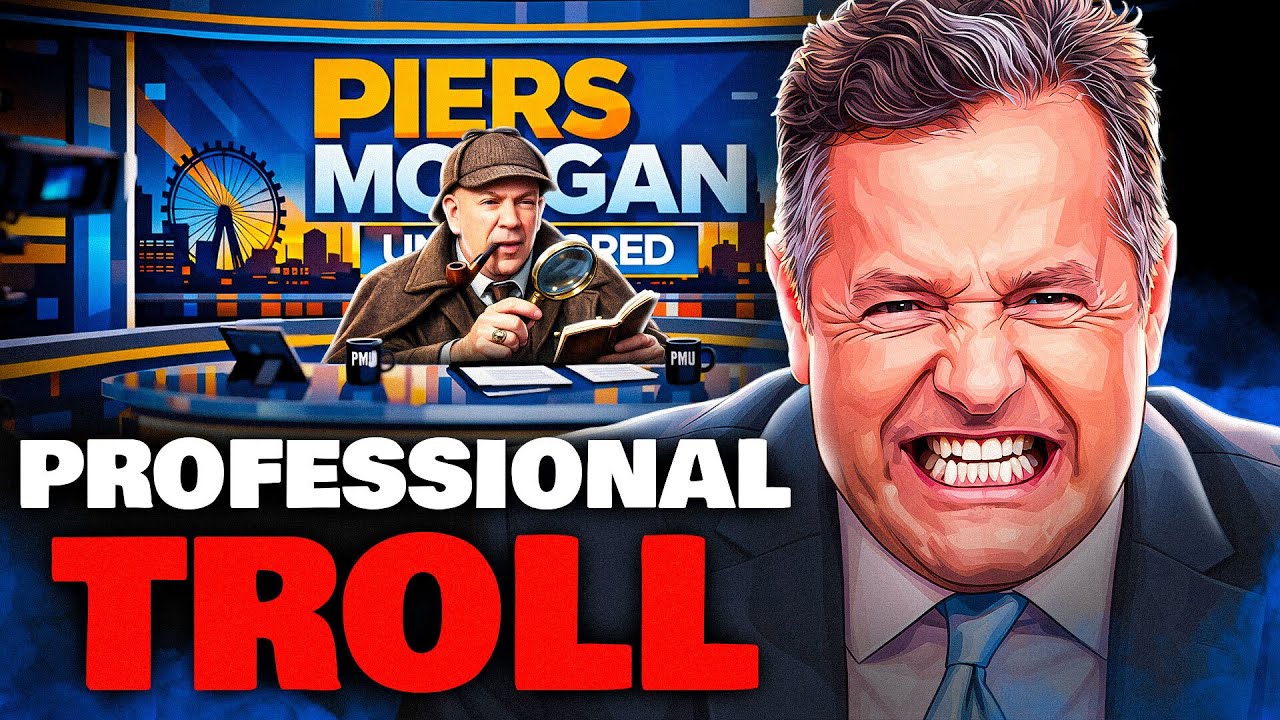
Love him or hate him, you know the name Piers Morgan. For decades he has been one of the most unavoidable figures in British media. From Fleet Street newspapers to American television, from viral breakfast TV debates to YouTube interviews watched by millions, Morgan has built a career around one simple reality. If there is an argument happening, he is often already in the middle of it.
To supporters, he is a journalist willing to say what others are too cautious to say publicly. To critics, he represents the opposite. A media personality who provokes conflict because outrage keeps audiences watching. The truth, as with most figures who dominate the media landscape for this long, likely sits somewhere between those two views.
What cannot be denied is that Piers Morgan has mastered the art of attention.
Fleet Street Origins: Where the Persona Began
Long before television studios and viral social media clips, Piers Morgan was shaped by the ruthless world of British newspapers. The Fleet Street culture of the 1990s was intense, competitive and often unforgiving. Headlines were not simply news stories. They were weapons in a battle for readers.
Morgan thrived in that environment.
By his early thirties he had become the youngest editor of a national newspaper in decades, taking control of the Daily Mirror. It was a remarkable rise and a clear sign that he understood something fundamental about the media industry. Success was not only about reporting the facts. It was about commanding attention.
In Fleet Street, outrage was rarely seen as a risk. It was often a strategy. Editors were rewarded for front page stories that forced the public to react, debate and argue. Balance and caution did not sell newspapers. Impact did.
This culture shaped Morgan’s approach to media. It taught him to defend stories publicly, to stand firm under criticism and to recognise that silence often means irrelevance. Those lessons would follow him for the rest of his career.
The Daily Mirror Scandal That Changed Everything
Every rise in media eventually meets its moment of crisis. For Piers Morgan, that moment arrived in 2004.
As editor of the Daily Mirror, Morgan approved the publication of photographs that appeared to show British soldiers abusing Iraqi prisoners during the Iraq War. The images triggered immediate outrage and international attention. At first it looked like one of the biggest exclusives of the war.
Then the story began to unravel.
Investigations suggested the photographs were fabricated. The fallout was swift and brutal. Morgan was dismissed from his role almost immediately, ending his tenure at one of Britain’s biggest newspapers.
For most editors, such a public controversy could have ended their careers entirely. Journalism depends heavily on credibility, and critics argued that the scandal proved Morgan’s approach had finally gone too far.
Yet Morgan did something unexpected. He refused to disappear.
Instead of retreating quietly, he wrote a memoir detailing his experiences in the newsroom. The book became a bestseller and marked the beginning of a shift that would redefine his career.
From Editor to Television Personality
After leaving Fleet Street, Morgan moved into television. It was a subtle but important transition.
Instead of returning as a traditional journalist, he began to lean into a new role. The outspoken commentator.
He appeared on panel shows, hosted talk programmes and eventually became a judge on talent competitions such as Britain’s Got Talent and America’s Got Talent. Here audiences saw a different side of Morgan. Still blunt and often controversial, but now operating within entertainment rather than pure journalism.
Television rewards strong personalities. Producers look for voices that generate reactions rather than polite agreement. Morgan understood this quickly.
He began to build a public persona around being the antagonist. The blunt critic who asked uncomfortable questions and challenged guests directly. Sometimes the tone was humorous. Sometimes it crossed into confrontation.
But it worked. Audiences responded.
The American Experiment and the Gun Debate
Morgan’s next major move took him across the Atlantic. In 2011 he launched Piers Morgan Tonight on CNN, stepping into a prime time slot previously occupied by Larry King.
The move was ambitious. A British journalist hosting an American nightly news show was unusual enough on its own. But Morgan also brought strong opinions into some of the most polarising debates in the United States.
The issue that defined his time on CNN was gun control.
After the Sandy Hook school shooting in 2012, Morgan became one of the most vocal media figures calling for stricter firearm laws in America. Night after night he debated politicians, activists and gun rights supporters on live television.
Supporters praised him for asking difficult questions during a national tragedy. Critics argued that he misunderstood American culture and constitutional rights.
The backlash was fierce. At one point a petition calling for Morgan’s deportation from the United States gathered hundreds of thousands of signatures.
Ratings began to decline and by 2014 the show was cancelled. Another high profile job had ended in controversy.
But once again, Morgan was far from finished.
Good Morning Britain and the Power of Viral Debate
Back in the UK, Morgan found what many consider the perfect stage for his style of broadcasting. Good Morning Britain.
Breakfast television is usually designed to be calm and welcoming, but Morgan brought a confrontational edge to the format. Political debates, celebrity interviews and social issues frequently turned into heated exchanges.
Clips from the show spread rapidly across social media. By lunchtime many of the arguments were already trending online.
To supporters, Morgan represented a voice willing to challenge political correctness and speak plainly about controversial topics. To critics, he was turning breakfast television into a daily culture war.
Regardless of which side people took, the ratings were strong. The show became one of the most talked about programmes on British television.
Meghan Markle and the Walk Off Heard Around Britain
The moment that ended Morgan’s time on Good Morning Britain came in 2021 following the high profile Oprah Winfrey interview with Prince Harry and Meghan Markle.
During the interview Meghan spoke about experiencing severe mental health struggles and feeling unsupported within the royal family.
The following morning Morgan stated on air that he did not believe her claims.
The comments sparked a massive backlash. Tens of thousands of complaints were filed with the UK broadcasting regulator. A heated on air argument with co presenter Alex Beresford escalated until Morgan walked off the set live during the broadcast.
Within hours he had left the programme.
Once again the reaction split the public. Some believed Morgan had crossed a line by dismissing claims about mental health. Others argued he had been punished simply for expressing an opinion.
Piers Morgan Uncensored and the Digital Pivot
Leaving Good Morning Britain might have ended many broadcasting careers, but Morgan quickly returned with a new show titled Piers Morgan Uncensored.
The programme launched on TalkTV and leaned heavily into the persona Morgan had built over decades. Direct interviews, heated debates and strong opinions about modern politics and culture.
More importantly, the show embraced the digital world.
Morgan began focusing heavily on online distribution, particularly YouTube. Interviews with high profile figures such as Cristiano Ronaldo quickly gathered millions of views, proving that traditional television was no longer the only path to a massive audience.
In many ways the move reflected a wider shift in media. Attention now lives online as much as it does on television.
Morgan adapted to that reality.
What Piers Morgan Represents in Modern Media
After decades in the public eye, Piers Morgan has become more than just a presenter or journalist. He represents a broader debate about modern media itself.
To some, he symbolises resistance against a media culture they believe has become overly cautious and afraid to offend. To others, he represents the opposite. A media figure who thrives on conflict and uses controversy as a product.
Both views exist at the same time.
What is undeniable is that Morgan understands how attention works in the digital age. In a world driven by reactions, debate and viral clips, relevance often comes from being talked about rather than universally liked.
Piers Morgan did not accidentally become one of the most recognisable voices in modern media. He built that position through confrontation, persistence and a willingness to remain in the centre of the argument.
Whether people admire or criticise that approach, one thing remains certain.
People are still watching.