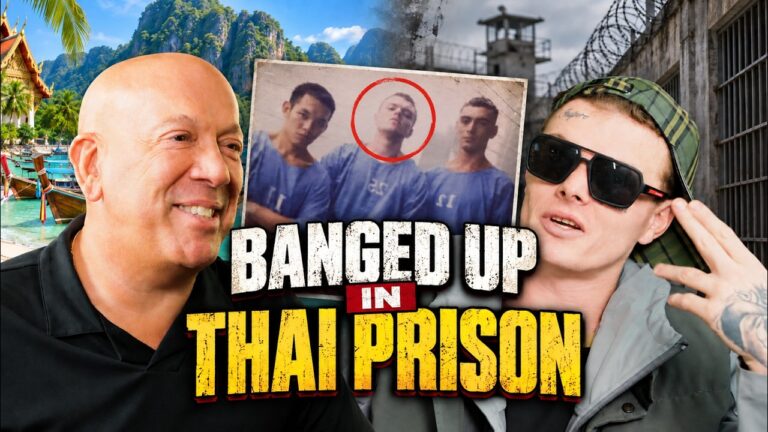

Darren G has returned to The Terry Stone Connection for a wide-ranging conversation about personal transformation, social division, knife crime, social media and the importance of bringing communities together.
Appearing on the podcast for the first time in around two years, Darren reflected on the challenges he has faced since leaving prison, the completion of his first ten-year plan and the principles shaping the next chapter of his life.
Although the discussion covers several controversial and deeply personal subjects, one message sits at the centre of the episode: unity is key.
Why Darren G Believes Unity Is Key
Darren argues that people across the UK are increasingly being separated by politics, religion, race, class and competing online movements.
In his view, the public is often encouraged to choose between opposing sides rather than concentrate on the problems shared by communities across the country.
His message is not that everybody must hold the same beliefs. Instead, he believes people should identify common causes that matter regardless of their background.
Christians, Muslims, Jews, Sikhs and people of other faiths may live differently, but they can still agree on the importance of protecting children, reducing violence, improving neighbourhoods and creating opportunities for the next generation.
Unity, according to Darren, begins when people stop viewing their neighbours as the enemy.
Moving Beyond Left Versus Right Politics
A major theme of the podcast is the growing divide between the political left and right.
Darren describes these political identities as separate rooms that people enter, leaving the centre ground empty. Once inside those spaces, individuals can become consumed by the language, behaviour and priorities of their chosen group.
He believes people should instead remain in the middle and concentrate on the issues that affect ordinary families.
This does not mean abandoning individual opinions. It means recognising that people with different political views can still work towards the same practical outcomes.
Cleaner streets, safer communities, better youth services and greater accountability are not exclusively left-wing or right-wing ambitions. They are concerns shared by millions of people.
Completing a Ten-Year Plan After Prison
One of the most powerful parts of the conversation focuses on Darren’s life after prison.
Before his release on 21 June 2016, he created a ten-year plan. Its central objective was simple but significant: stay out of prison.
That meant avoiding further offences, separating himself from criminal influences and learning from the decisions that had previously damaged his life.
Darren explains that he completed that period without returning to prison, despite facing homelessness, instability, conflict and several serious threats.
Completing the plan represents more than reaching a date. It demonstrates the value of setting a long-term direction and making decisions that support it, even during periods of adversity.
He has now entered a second ten-year chapter focused on building financial stability, creating opportunities and providing a better life for his children.
The Importance of Honest Self-Reflection
Throughout the episode, Darren repeatedly returns to the importance of telling yourself the truth.
He believes many people become disconnected from who they are because they avoid confronting their actions, fears and mistakes. Over time, those unresolved experiences can influence relationships, confidence and behaviour.
His advice is to spend time in solitude without phones, distractions or outside opinions.
This process is not presented as an instant solution. Honest self-reflection can be uncomfortable, particularly for someone who has experienced trauma.
However, Darren believes that examining your own behaviour is necessary for lasting personal change.
Knowing yourself also makes it harder for online criticism to define you. When people understand their strengths, weaknesses and intentions, they become less dependent on the approval of strangers.
Achievement, Belief and Action
The conversation also challenges popular interpretations of the law of attraction.
Darren questions the idea that simply believing in a desired outcome will cause it to appear. He argues that achievement often comes before belief.
A small accomplishment can provide evidence that change is possible. That evidence builds confidence, which makes larger goals feel achievable.
Terry Stone adds that ambition must be supported by action. Visualising a better home, career or future may offer direction, but progress still requires work, sacrifice and persistence.
The message is particularly relevant in an online culture that frequently promotes overnight success.
Most meaningful achievements are created through small steps, difficult jobs, failed attempts and lessons learned along the way.
Tackling Knife Crime Through Early Intervention
Knife crime and youth violence form another major part of the discussion.
Darren believes punishment alone cannot solve the problem. While consequences are necessary, intervention must begin before a young person enters the prison system.
Children living in areas affected by gangs may begin carrying weapons because they are frightened, influenced by older people or seeking status and protection.
Darren argues that giving an automatic severe sentence to every young person carrying a knife could turn vulnerable children into more experienced criminals.
Instead, he advocates education, positive role models and programmes that challenge destructive thinking before offences escalate.
Young people need to see working parents, tradespeople, mentors and community leaders receiving the same recognition often given to criminals online.
The Five-Phase Flower Pot Model
Darren introduces a personal development concept called the five-phase flower pot.
The model compares the mind to a flower pot in which thoughts are planted like seeds.
A person wanting to stop carrying a knife, taking drugs, smoking or behaving aggressively begins by planting a positive thought each morning.
That thought is then reinforced repeatedly, allowing it to develop into a new pattern of behaviour.
The five stages involve planting the seed, watering it through repetition, allowing it to sprout, supporting its growth and maintaining the positive habit.
Darren hopes the model can eventually become part of a structured programme for young people at risk of offending.
The concept is simple, but its central principle is valuable: repeated thoughts can influence repeated actions.
How Social Media Encourages Conflict
The podcast also explores the role of social media in modern disagreements.
Both Darren and Terry discuss how online platforms reward controversy, reaction videos, personal conflict and provocative headlines.
Arguments can become content, and content can generate views, followers and income.
This creates an incentive for creators to provoke one another rather than resolve disagreements privately.
Darren also believes constant exposure to online opinions prevents people from thinking independently. Instead of questioning what they see, users may adopt the beliefs of creators, political movements or online communities.
The solution is not necessarily to leave social media completely. It is to use it consciously, question information and avoid allowing algorithms to determine personal beliefs.
Rebuilding Stronger Communities
The episode ultimately returns to the importance of community.
Darren and Terry discuss the decline of youth centres, local services, face-to-face relationships and positive neighbourhood role models.
When community structures disappear, young people may look elsewhere for belonging. Gangs, extremist movements and online personalities can fill that gap.
Rebuilding communities therefore requires more than policing. It requires accessible activities, employment opportunities, education, mentorship and adults who are willing to provide guidance.
It also requires people to speak to one another again.
Small actions, such as opening a door, helping a neighbour or treating someone with respect, can begin rebuilding the trust that many communities have lost.
Unity as a Practical Solution
Darren G’s appearance on The Terry Stone Connection is intense, personal and at times confrontational. However, the central message is constructive.
People do not need to agree on every political, cultural or religious issue to work together.
They only need to identify the values and concerns they share.
Protecting children, reducing knife crime, supporting families, creating opportunities and improving local communities are goals capable of bringing people together.
Darren’s message is that division keeps people distracted, while unity gives communities the strength to demand meaningful change.
Whether listeners agree with all his opinions or not, the episode raises an important question: what could Britain achieve if more people focused on their shared future rather than their differences?