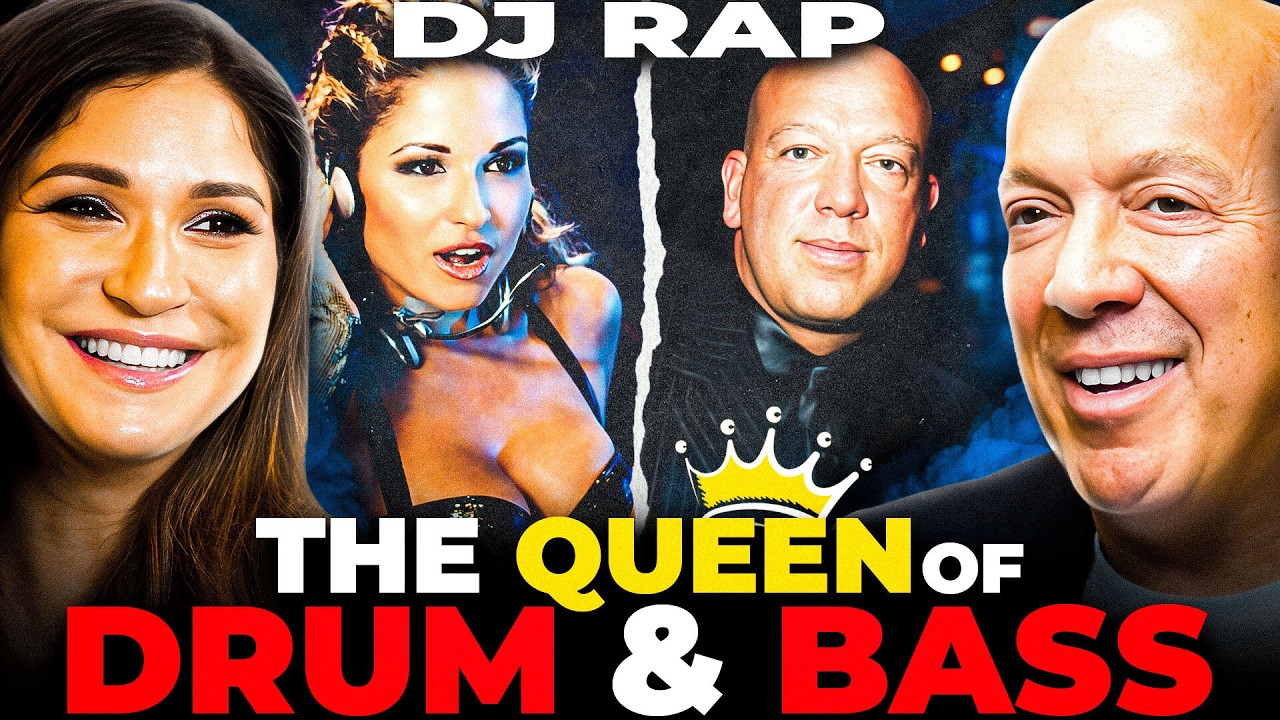
Few figures in electronic music have influenced the scene quite like DJ Rap, widely recognised as the “First Lady of Jungle.” Long before female DJs became a common sight on festival line-ups, she was breaking barriers in a male-dominated industry and helping shape the underground culture that would eventually grow into the global drum and bass movement.
Her journey through music has taken her from pirate radio stations and gritty warehouse raves to platinum records and international stages. Along the way she has faced controversy, career collapses, and moments of deep personal struggle, yet each time she has rebuilt herself through the same force that started it all: a relentless love of music.
Behind the iconic name lies a story that is far more complex than many fans realise, one that stretches across continents, underground scenes and decades of musical evolution.
Early Life: Growing Up Between Countries and Cultures
DJ Rap’s story begins far from the rave scene that would later define her career. She was born in Singapore and spent much of her childhood moving from country to country as her family’s circumstances constantly changed. Her mother married several times, and one of those marriages involved running hotels around the world, which meant that life for a young DJ Rap was rarely stable for long.
For the first years of her life she lived in international hotels, relocating every few months to different destinations including Malta and Indonesia. Although it might sound glamorous on the surface, the constant movement meant that she never stayed anywhere long enough to feel rooted or to build lasting friendships.
Eventually the travelling lifestyle ended and she was placed in convent boarding schools, a drastic shift from the freedom and unpredictability of her earlier childhood. These years brought their own challenges, but they also strengthened her independence and determination, qualities that would later define her approach to the music industry.
Amid all the disruption, one constant influence remained: music. Her mother, who had been both an actress and an entrepreneur, introduced her to the piano at a young age and encouraged her to learn through instinct rather than strict musical theory. This approach shaped the way DJ Rap would later produce music, relying heavily on feeling, rhythm and emotional connection rather than technical formulas.
Discovering Music and the Underground Scene
DJ Rap’s path into the music industry began during her teenage years, when she started experimenting with songwriting and recording ideas. By the mid-1980s she was already writing music and searching for ways to turn those ideas into actual records.
Her first breakthrough came when she met a producer named Jeff B, who worked in a record shop. After playing him a series of piano chords she had written for a song idea, the two decided to collaborate and eventually released a track in 1988. At the time the underground dance music scene in the UK was exploding with new energy, driven largely by pirate radio stations that broadcast emerging sounds to thousands of listeners across London.
Rather than relying on traditional music promotion, DJ Rap embraced this underground system and began learning how to DJ so she could play her own music on pirate radio. Stations like Rave FM and Centre Force became platforms where she could experiment with mixing records and introducing audiences to her productions.
During these early years the sound she was playing was not yet jungle or drum and bass. Instead, the dominant styles were acid house, Balearic house and early rave music, genres that laid the groundwork for the darker, faster sounds that would emerge in the early 1990s.
By mastering both production and DJing simultaneously, she developed the two skills that would later make her a powerful force within the scene.
Breaking Barriers in a Male-Dominated Industry
The rave scene of the late 1980s and early 1990s was overwhelmingly male, particularly when it came to DJs and producers. While women certainly existed within the culture, they were rarely given the same opportunities as their male counterparts and were often placed in smaller rooms or supporting roles rather than headlining main stages.
DJ Rap refused to accept that limitation.
From the beginning she pushed promoters to take her seriously as both a performer and a producer, making it clear that she wanted to play the same stages as the biggest names in the scene. Her persistence eventually paid off, and she began landing slots at major events that had previously been dominated entirely by male DJs.
This determination led to several historic milestones. She became one of the first female DJs producing rave records, one of the first women regularly performing main stage jungle sets, and one of the first female artists in the scene to demand equal pay with male DJs.
Her reasoning was simple: if she could move a crowd and deliver a powerful set, there was no justification for paying her less.
That attitude helped shift perceptions within the industry and opened the door for future generations of female DJs and producers.
The Birth of Jungle and a Turning Point in Her Career
The early 1990s marked the birth of jungle music, a genre that fused breakbeats, reggae influences, deep basslines and rave culture energy into something entirely new. Clubs like AWOL at London’s Paradise Club became legendary spaces where this sound developed and where DJs and producers pushed the boundaries of what electronic music could be.
For DJ Rap, discovering jungle was a turning point.
The darker tones and intricate rhythms immediately caught her attention as a producer, and she began studying the genre obsessively, watching DJs like Randall and Kenny Ken while analysing how the music was constructed. She spent countless hours experimenting in the studio, determined to create tracks that captured the same energy she felt on the dancefloor.
One of those experiments eventually became the track “Spiritual Aura,” a record that transformed her reputation within the jungle community. Suddenly she was no longer simply a DJ playing the music, but a respected producer contributing to the sound itself.
From that moment onward she became fully embedded in the scene, working alongside some of the genre’s most influential figures and helping shape the direction jungle would take during its formative years.
Controversy, Challenges and Career Setbacks
The rave and jungle scenes of the 1990s were vibrant but often chaotic environments. Events were frequently targeted by authorities, clubs were shut down, and violence sometimes erupted at large gatherings.
DJ Rap experienced this volatility firsthand when a tragic incident occurred outside a venue where she was performing. Unaware that someone had died outside the club, she played a track titled “Mr Kirk’s Your Son Is Dead.” Although the choice was purely accidental, the backlash was immediate and severe.
Many within the London scene blamed her for the perceived insensitivity, and as a result she lost many of her bookings in the capital almost overnight.
Rather than allowing the controversy to end her career, she adapted by focusing on clubs and promoters in the north of England, where audiences embraced her music and gave her the chance to rebuild her reputation.
It was a harsh lesson about how quickly fortunes could change in the music industry, but it also strengthened the resilience that would become one of her defining traits.
International Success and the Move to America
The next major phase of DJ Rap’s career arrived when she signed a record deal with Sony and began experimenting with a broader electronic sound that blended elements of jungle with melodic and pop influences.
One track in particular, “Learning Curve,” became a breakthrough success in the United States, eventually achieving triple platinum status and introducing her to a much wider audience beyond the underground rave scene.
The momentum from that success led her to relocate to America, where she expanded her career into new creative territories. During this period she became involved in fashion campaigns, media appearances and major festival performances, establishing herself as one of the most recognisable female electronic artists of the time.
At one point she even appeared in campaigns during New York Fashion Week alongside other major figures in electronic music, an experience that highlighted just how far she had travelled from the pirate radio stations of London.
Reinvention After Rock Bottom
Despite the success, the pressures of the industry eventually caught up with her. Record deals ended, opportunities disappeared and the momentum that once surrounded her career began to fade.
Like many artists, she experienced moments where everything seemed to collapse at once.
These periods forced her to confront deeper questions about identity, purpose and self-worth, particularly when so much of her life had been built around music and success within the industry.
Through years of personal reflection, discipline and emotional growth, she gradually rebuilt her life and her relationship with music. Instead of chasing industry approval or chart success, she began focusing on something far more meaningful: making music that genuinely connected with the people who cared about it most.
A New Model for Music and Fans
In recent years DJ Rap has embraced a completely different approach to releasing music. Rather than relying heavily on streaming platforms where artists earn only small fractions of revenue, she began selling music directly to her most dedicated supporters through her own website and subscription community.
This direct-to-fan model allows her to maintain full creative control while also building stronger relationships with listeners who genuinely value her work.
It also reflects a growing movement within the music industry, where independent artists are moving away from traditional label systems and focusing instead on community-driven platforms.
For DJ Rap, success today is measured less by streaming numbers and more by the strength of the connection she has with her audience.
Looking Ahead: The Next Chapter
Now in her late fifties, DJ Rap believes the most exciting chapter of her creative life may still be ahead of her.
After years of refining her production skills and studying new techniques, she says she finally feels fully aligned with her craft. The music she is creating now reflects decades of experience, experimentation and persistence.
Her focus moving forward includes producing new jungle and drum and bass music, expanding her fan community, teaching aspiring producers and continuing to perform for audiences around the world.
She has also built a home studio abroad where she can concentrate on creativity in a peaceful environment away from the pressures of the industry.
The Legacy of the First Lady of Jungle
DJ Rap’s career represents far more than the story of a DJ who found success in the rave scene. It is the story of someone who helped shape an entire genre while overcoming extraordinary personal and professional obstacles along the way.
She broke barriers for women in electronic music, survived the constant highs and lows of the entertainment industry, and repeatedly reinvented herself when circumstances forced her to start again.
Through it all, one thing has remained unchanged: her passion for music and the belief that creativity can transform even the darkest moments into something powerful.
And after decades in the industry, the First Lady of Jungle shows no signs of slowing down.