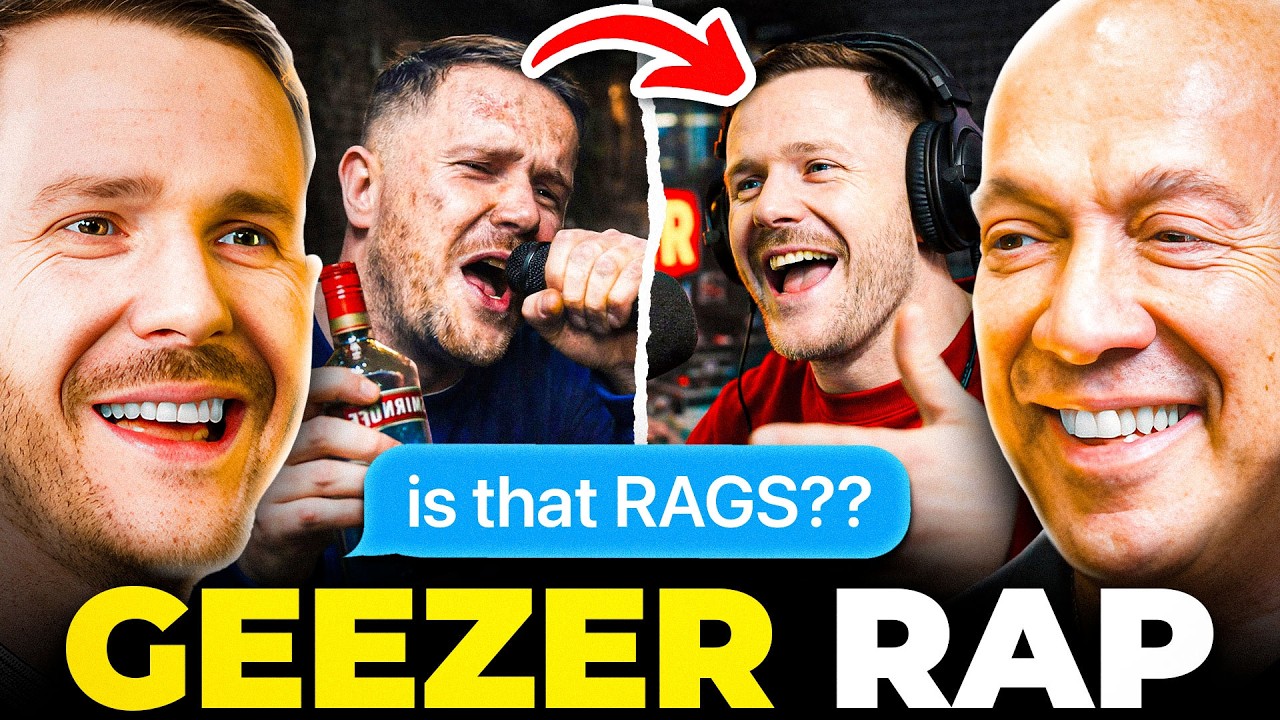
Rags the Goat is quickly becoming one of the most talked-about new voices in UK rap, but his rise has not come from a polished industry background or a carefully manufactured image. His story is raw, chaotic, funny, painful and genuinely inspiring. In a powerful conversation on The Terry Stone Connection, Rags opened up about his upbringing in South East London, his battle with addiction, time in young offenders, the pain of family loss, and how music has helped him rebuild his life.
For anyone discovering him through TikTok, Instagram or his recent EP The Long Way Home, there is much more to Rags the Goat than viral bars and quotable one-liners. His journey shows how talent, honesty and persistence can turn even the darkest chapters into something meaningful.
Who is Rags the Goat?
Born in Lewisham in 1991 and raised in South East London, Rags the Goat grew up in extremely difficult circumstances. He spoke openly about a childhood shaped by drugs, alcohol and instability at home. After his mother and father struggled with addiction, his upbringing shifted dramatically, with his nan and sisters stepping in to raise him.
That early instability clearly left a mark. While he describes himself as someone who was not stupid at school and did well in subjects like music and art, he also admitted that things started to unravel in his teenage years. Trouble followed, then crime, then time in young offenders institutions. By his own account, he was getting arrested, mixing with older lads and living a life that could easily have destroyed him for good.
That background matters because it explains the emotional weight behind his music. Rags is not playing a character. He is drawing from real life, real losses and real consequences.
A childhood marked by loss and survival
One of the most moving parts of the interview was hearing Rags speak about his mother, who died in 2001 from drugs and alcohol, and later his sister Rachel, who passed away in 2016 from a brain aneurysm. He described Rachel as being more like a mum to him, someone he could always run to when life went wrong.
Losing both of them had a huge effect on him. It pushed him further into destructive behaviour and deepened the emotional struggles he was already carrying. He spoke with honesty about how these experiences affected his mind and his choices, and how drink and drugs became both an escape and a trap.
It is this kind of openness that makes his story connect. He is not pretending to have all the answers. He is showing what it looks like when someone is still fighting, still healing and still trying to become better.
Addiction, relapse and the long fight to get sober
A major theme of the conversation was addiction and recovery. Rags was clear that sobriety has not been a quick fix or a neat redemption arc. He said people often assume someone goes to rehab, gets sorted and comes out a changed person, but for him it has been a long and difficult process over several years.
He described psychosis, being sectioned, self-harm and complete loss of self during heavy periods of drink and drug use. He also spoke about repeated relapse, explaining that recovery often looked like one week sober, then relapse, then two weeks sober, then another relapse.
That honesty is important because it reflects the reality many people face. Recovery is rarely linear. What makes Rags compelling is that he does not glamorise the chaos, even when he turns parts of it into darkly funny lyrics. He is honest about the damage, the shame and the risk of losing everything.
His advice for anyone struggling was simple but powerful. He talked about “fast forwarding” 24 hours when tempted to relapse. In other words, imagine where the decision will lead. Picture the aftermath. Ask yourself if you really want that ending. It is a grounded, practical mindset and one that clearly comes from lived experience.
How Rags the Goat went viral on TikTok
Although Rags had been making music for years under the name Rago, his wider breakthrough came through a very different route. Not through an industry co-sign at first, not through a label push, but through social media and sheer authenticity.
One of his first viral moments came from a chaotic freestyle filmed in a car park while he was, in his own words, completely out of his head. The clip blew up, pulling in millions of views and sparking attention because people could see that beneath the madness there was undeniable talent.
Then came the moment that really shifted things. After an argument at home, he made what he called a “silly video” and eventually uploaded it to TikTok after encouragement from his partner. Within 24 hours, it had around a quarter of a million views. That gave him the push to make more.
His second video, tied into England and the Euros, also took off. It mixed football culture, relationships, nights out and that unmistakable geezer energy that has become central to his style. It resonated because it felt real, funny and sharply observed. Rags was no longer just another rapper trying to fit into an existing mould. He had found his lane.
Why his music connects with people
Rags the Goat has often been compared to Mike Skinner or even called a modern-day geezer rapper with echoes of The Streets, but what makes him stand out is that his music sits at the intersection of humour, grit and vulnerability.
He can write bars that make people laugh, but he can also write tracks that genuinely hit home for people going through addiction, grief and identity struggles. His EP The Long Way Home seems to capture that balance perfectly. He explained that the project tells the story of his life, from childhood through addiction and into recovery.
The response has been meaningful. He mentioned hearing from someone in rehab who said the EP had helped them stay sober. That kind of message clearly matters to him. It proves that music can be more than entertainment. It can be a lifeline, a release or a reminder that no one is completely alone.
Fatherhood, family and a reason to change
If there is one turning point in the story, it is fatherhood. Rags spoke emotionally about his partner and their baby son Teddy, and how becoming a dad has changed the way he sees his future.
He talked about wanting to break the cycle. He does not want his son to grow up seeing the same instability, addiction and absence that shaped his own life. That responsibility now sits at the centre of everything. It is no longer just about getting clean for himself. It is about being present, trustworthy and building a real life.
That also seems to be fuelling his music career. Rags said plainly that he would not be able to do this properly if he were still using. Sobriety has given him structure, focus and a sense of self-worth that was missing before.
Why Rags the Goat is one to watch in UK rap
There is a reason people are paying attention. Rags already has viral traction, an identifiable style, a powerful backstory and growing support from recognised names in music and entertainment. He has collaborated with Bad Boy Chiller Crew, performed live, and continues to build momentum through both music and personality.
More importantly, he feels believable. In a crowded rap scene, authenticity still cuts through. Rags the Goat is not trying to be perfect. He is trying to be real. That is exactly why audiences are connecting with him.
His story is still being written, but right now he represents something bigger than just another artist on the rise. He is proof that talent can survive chaos, that recovery is possible even after years of damage, and that sometimes the long way home is the one that shapes you most.
If he keeps this consistency, keeps his sobriety front of mind and keeps making music with the same honesty, Rags the Goat could become one of the most distinctive voices in UK rap.