
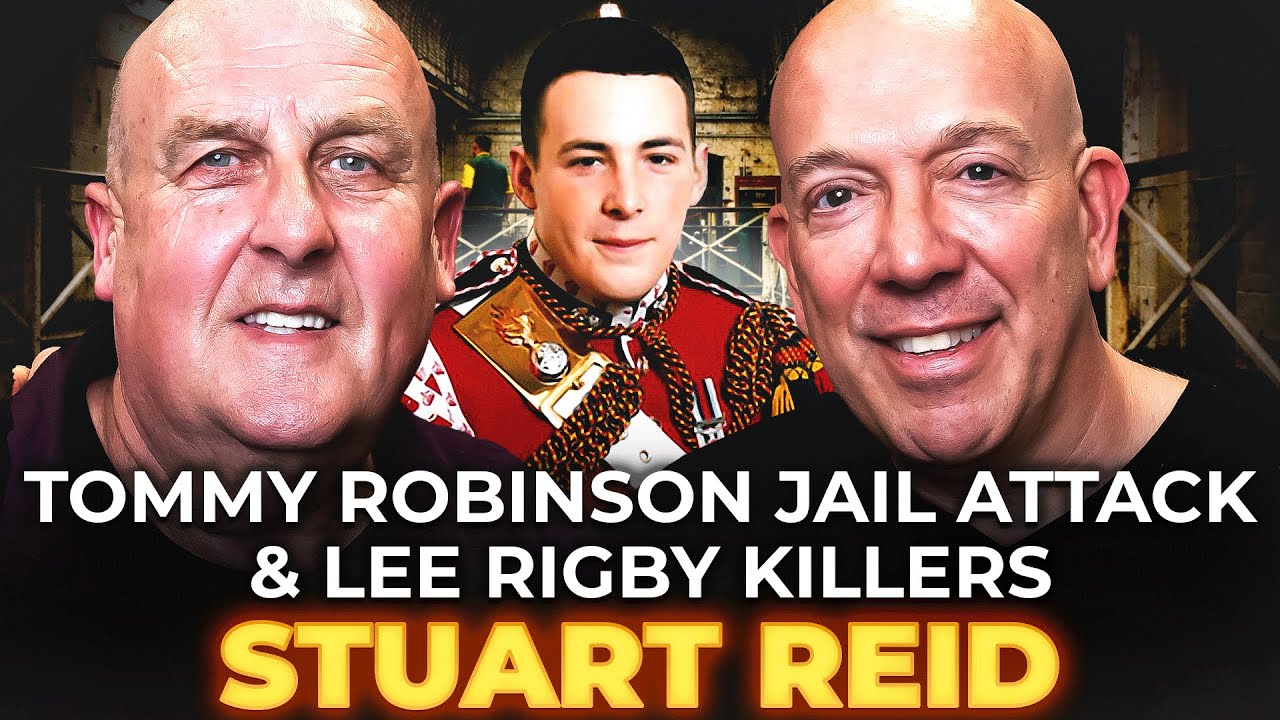
The Terry Stone Connection Podcast has built a reputation for bringing raw and unfiltered stories from the world of crime. In this episode, returning guest Stuart Reed shares a deeper look into his life, his time as a Category A high-risk prisoner, and the lessons he believes younger generations should take from his story.
Reed was once a major figure operating quietly within Britain’s criminal underworld. Unlike some criminals who chase notoriety, he says he always preferred to stay under the radar, keeping his profile low despite being connected to major players across Europe.
Now in his sixties and having served more than a decade behind bars, Reed has begun documenting his experiences in a series of books. The first focuses on his arrest in 2013 and the years that followed, detailing what it is really like to live under the most restrictive prison conditions in the UK.
His goal is simple. Tell the truth about prison life and hopefully steer some people away from the path that led him there.
What It Means to Be a Category A Prisoner
In the UK prison system, inmates are divided into four main categories.
Category D prisoners are considered low risk and often held in open prisons. Category C and B prisoners represent increasing levels of risk to the public. But Category A prisoners sit at the very top of the security ladder.
According to Reed, only a tiny percentage of prisoners fall into this category.
Out of roughly 80,000 prisoners in the UK, around 800 are Category A, and within that group an even smaller number are labelled Category A high risk. These inmates are considered extremely dangerous or likely to attempt escape.
Being in that group comes with heavy restrictions.
Movement is tightly controlled. Prisoners are closely monitored. Even visits from family are heavily supervised. Reed describes officers sitting only a foot away while conversations take place, listening and sometimes writing down everything that is said.
For families, the experience can be overwhelming.
Reed recalls how intrusive security checks eventually pushed his family away from visiting. At one point, his young granddaughter was searched during a visit. That moment became the breaking point for his partner, who decided never to return.
For Reed, this was one of the hardest consequences of prison life.
The Psychological Reality of Prison
Reed makes an unusual claim about prison. He insists it is not necessarily physically hard.
Instead, he believes the real battle is psychological.
Living in prison means dealing with constant routines, surveillance, and the knowledge that years of your life are passing in the same environment every day. For high-risk prisoners the pressure increases further.
Reed describes being woken repeatedly throughout the night for security checks, sometimes every hour. Officers would shine torches into cells to confirm prisoners were still there.
Over time, that lack of sleep and constant observation begins to affect the mind.
It is this mental strain, he argues, that changes people the most.
You may survive the routine, but it alters how you see the world.
Violence in High-Security Prisons
Contrary to what many people assume, Reed says not every day in high-security prisons is violent.
But when violence does occur, it can escalate quickly.
In lower-security prisons fights may involve punches or minor injuries. In dispersal prisons that house the most serious offenders, conflicts can become much more serious.
According to Reed, disputes can lead to contracts being placed on other prisoners, with money offered to carry out attacks.
Some of these incidents are triggered by personal conflicts, while others involve gang rivalries or unpaid debts.
One example he recalls involved a prisoner transferred from another facility who was attacked almost immediately after arrival. Word had spread about a previous dispute, and within hours the situation escalated into a serious stabbing.
For Reed, this is the harsh reality of prisons housing long-term offenders. Many inmates are serving decades behind bars, and that environment can create a dangerous mindset where conflicts are resolved through extreme violence.
The Unspoken Prison Rules
Despite the harsh environment, Reed says there are simple rules that many prisoners follow to survive.
The first rule is to keep yourself to yourself.
Prison is full of different personalities, alliances, and tensions. Getting involved in other people’s business often leads to trouble.
The second rule is to never allow yourself to become a victim.
If someone tries to intimidate or bully you, Reed says you must stand your ground immediately. Even if you lose a fight, showing that you will defend yourself can prevent future problems.
He believes most prison conflicts actually stem from drugs or debts, rather than random violence.
Those who avoid both tend to have a quieter time.
Strange and Surprising Moments Behind Bars
Even in the bleak environment of a maximum security prison, Reed says there were moments of unexpected humour.
One story involves a prisoner known for his incredible strength who claimed to be one of the strongest men in the system. During a debate about fitness, the two agreed to race across a prison hall.
What happened next turned the moment into a spectacle.
As the race began, the heavily built prisoner lost his footing on the smooth floor and slid across the room before crashing into a table. The audience of prisoners and officers erupted in laughter.
In another incident, a prisoner slipped on a freshly mopped staircase and slid down several floors in dramatic fashion, leaving everyone shocked but eventually laughing once they realised he was unharmed.
Stories like these, Reed says, remind people that prison life is not only grim.
There are moments where humour becomes a way to cope with the reality of confinement.
Reflections on Crime and Consequences
Today, Reed says his priorities have changed completely.
In the past, material success was everything. Expensive cars, watches, and money were symbols of status.
But after spending years in prison, he believes those things were meaningless.
What he values now is something much simpler.
Peace of mind.
Reed often recalls seeing younger inmates wearing expensive designer clothes and trainers while serving long sentences. For him, it was a reminder of the misplaced priorities that lead many people into crime.
Many of those prisoners, he says, were not inherently bad people. They simply made poor choices, chasing money or reputation without understanding the consequences.
His hope is that by sharing his experiences, others might think twice before going down the same road.
The Problem of Long Sentences
Reed also raises concerns about the future of the prison system.
With increasing numbers of long sentences being handed down each year, he believes the UK could struggle to sustain its growing prison population.
Hundreds of people are convicted of serious crimes annually, many receiving sentences lasting decades. Over time this creates a system filled with aging inmates serving extremely long terms.
He argues that rehabilitation and support after release are essential to reduce reoffending.
When Reed was released after 11 years in prison, he says he was given little support beyond a small amount of money and instructions to rebuild his life.
Without proper reintegration programs, many former prisoners struggle to find stability.
Why Stuart Reed Wrote His Books
Reed insists his books are not about glorifying crime.
Instead, he sees them as a record of what he experienced and the consequences that followed.
Readers can decide for themselves whether the stories inspire them or serve as a warning.
For Reed, the most important message is simple.
The criminal lifestyle may appear exciting or profitable in the short term, but the long-term consequences are severe.
Years in prison, strained family relationships, and the psychological toll of confinement are prices many people never consider until it is too late.
A Life Lesson from the Other Side of Prison
Looking back, Reed believes the most valuable thing anyone can have is stability and peace of mind.
Not expensive possessions. Not reputation. Not influence.
Just the ability to live freely without the constant fear of surveillance, prison, or losing years of your life.
For the younger generation tempted by fast money and criminal shortcuts, he hopes his story acts as a warning.
Because once you step onto that path, turning back is far harder than most people realise.
And for many who enter the system, freedom becomes something they will spend years trying to reclaim.