
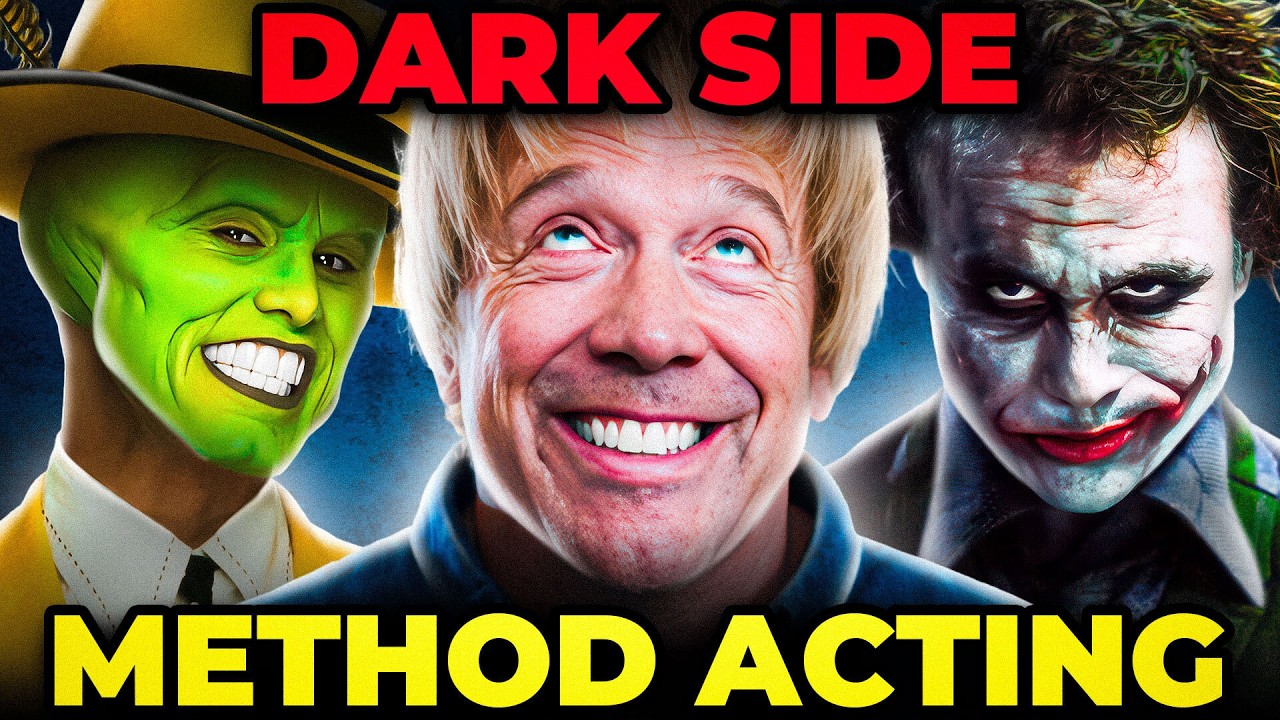
Method acting has produced some of the most powerful performances in film and television history. When done well, it creates characters so believable that audiences forget they are watching an actor at all. The performance feels real, raw and completely authentic. Yet behind many of these legendary performances lies a darker truth. Method acting often demands a level of psychological immersion that can blur the line between the character and the person playing them.
For some actors, stepping into a role is not simply about learning lines and delivering emotion on cue. It becomes an all-consuming process of living as someone else. The character does not disappear when the cameras stop rolling, and sometimes the actor struggles to find their way back to themselves. This is the hidden cost of method acting, a technique that has shaped some of the greatest performances in cinematic history.
What Is Method Acting?
Traditional acting focuses on performance. Actors learn their lines, understand their character’s motivations and deliver the right emotions when the scene demands it. When filming ends, the costume comes off and the actor returns to their normal life.
Method acting works very differently. Instead of performing the character, the actor attempts to become the character. They adopt the mindset, habits and emotional state of the person they are portraying, often remaining in character for the entire duration of filming. The idea is simple in theory: if the actor truly lives as the character, the performance will feel completely genuine.
However, this level of immersion can be intense. When an actor spends weeks or months living inside a fictional personality, especially one that is dark or aggressive, those emotions can begin to seep into their real life.
Actors often describe the experience as carrying the character with them long after the scene is over. The voice, the posture and even the emotional responses can begin to feel natural, and that is when the boundaries between performance and identity start to blur.
When the Character Starts to Take Over
Anyone who has worked on a film set understands how repetitive and emotionally draining the process can be. Scenes are performed again and again from different angles, sometimes for hours at a time. Actors repeat the same dialogue, the same emotional beats and the same energy until it becomes embedded in their mind.
When the character is intense or aggressive, that repetition can start to affect the actor personally. Spending hours delivering angry or violent dialogue can shift your mindset without you even noticing it.
Some actors have spoken openly about how they occasionally slip back into character away from the set. A simple moment like driving in traffic or interacting with strangers can suddenly trigger the personality they have been living inside for weeks. It is not something they intend to do, but the emotional habits created during filming can be difficult to switch off instantly.
This is one of the reasons method acting has always sparked debate within the film industry. While it can produce extraordinary performances, it can also create a heavy psychological toll.
Daniel Day-Lewis: The Master of Method Acting
Few actors represent the extremes of method acting more clearly than Daniel Day-Lewis. Widely regarded as one of the greatest actors of all time, his commitment to roles has become legendary in Hollywood.
When preparing for the film My Left Foot, Day-Lewis played Christy Brown, an Irish writer and painter who lived with cerebral palsy. Rather than simply studying the condition, Day-Lewis decided to live as Brown throughout the entire production. He remained in character at all times, staying in a wheelchair both on and off camera. Crew members reportedly fed him between takes and physically carried him around the set.
The commitment was extraordinary, but it came at a cost. The process placed enormous strain on both the actor and those working around him. Yet the performance itself was undeniable, earning Day-Lewis an Academy Award for Best Actor.
His dedication did not stop there. For The Last of the Mohicans, he reportedly learned survival skills and insisted on hunting his own food so he could experience life as a frontier survivalist. In The Crucible, he even lived in a house built without electricity or running water to replicate life in the seventeenth century.
These stories have become part of acting folklore, demonstrating how far some performers will go in pursuit of authenticity.
James Gandolfini and the Weight of Tony Soprano
Another powerful example of method acting can be seen in James Gandolfini’s portrayal of Tony Soprano in the groundbreaking HBO series The Sopranos. Gandolfini did not simply play a gangster; he embodied the psychological complexity of a man torn between violence and vulnerability.
Tony Soprano felt frighteningly real because Gandolfini approached the character with deep emotional immersion. He reportedly exhausted himself before scenes, depriving himself of sleep and deliberately placing himself in uncomfortable situations to generate genuine anger or frustration.
This dedication helped create one of the most iconic characters in television history. Tony Soprano was not a cartoon gangster but a fully realised human being capable of both tenderness and brutality.
However, carrying such a heavy character for years can take its toll. The pressure of sustaining that emotional intensity season after season became increasingly difficult. Reports later emerged of struggles with stress, substance use and exhaustion.
While it would be unfair to blame method acting alone for those challenges, it illustrates the enormous psychological burden that can come with portraying such complex roles for extended periods.
Jim Carrey and Losing the Line Between Actor and Character
Jim Carrey’s experience filming Man on the Moon provides another striking example of method acting’s psychological impact. In the film, Carrey portrayed the eccentric comedian Andy Kaufman, a performer known for blurring the line between comedy and chaos.
Carrey immersed himself so deeply in the role that he reportedly stayed in character throughout the entire production. Cast and crew often had to address him as Andy, and when Kaufman’s alter ego Tony Clifton appeared, Carrey behaved exactly as the volatile character would.
This approach created moments of genuine confusion on set. The actor was not simply performing Kaufman’s unpredictability, he was living it. After filming ended, Carrey later admitted that stepping out of the role was more difficult than expected.
He described feeling as though he had temporarily lost himself in the process, raising a profound question about identity. If it is possible to lose yourself inside a character, then how stable is the sense of self that actors rely on?
Heath Ledger and the Joker Debate
Perhaps the most discussed example of method acting in modern cinema is Heath Ledger’s portrayal of the Joker in The Dark Knight. Ledger approached the role with intense psychological preparation, reportedly isolating himself for weeks to develop the character’s voice, movements and mindset.
He filled notebooks with thoughts, images and ideas that reflected the Joker’s chaotic worldview. This process allowed him to construct a character who felt genuinely unpredictable and dangerous.
Ledger’s performance became one of the most celebrated portrayals of a comic book villain ever captured on screen. Yet after his tragic death, speculation quickly emerged suggesting that the role itself had pushed him too far.
The truth is more complex. Acting alone cannot explain every personal struggle, and many factors contribute to mental health challenges. However, Ledger himself acknowledged that the role was exhausting and emotionally demanding.
His performance remains a reminder of the fine line between artistic dedication and personal wellbeing.
The Real Cost of Method Acting
Method acting has created some of the most unforgettable characters in film and television. When actors push themselves beyond comfort, they often unlock performances that feel completely authentic.
However, the technique raises an important question about the price of artistic excellence. If the process of creating a character requires emotional suffering, psychological strain or a temporary loss of identity, then the cost can be significant.
The entertainment industry often celebrates the results without always acknowledging the toll it takes on the performers themselves. Awards, critical acclaim and audience admiration rarely come with discussions about the emotional impact of reaching that level of authenticity.
Method acting will likely continue to be part of cinema for years to come, because it can produce extraordinary results. Yet the conversation around it is slowly changing, as more actors speak openly about the importance of protecting their mental health while pursuing their craft.
When the Role Follows You Home
The most haunting truth about method acting is that some roles do not end when filming stops. They linger in the actor’s mind, shaping their thoughts and emotions long after the final scene has been completed.
Great performances often require actors to explore difficult parts of human nature, including anger, violence, chaos and despair. When someone spends months living inside those emotions, walking away from them is not always simple.
Method acting can produce masterpieces, but it also reminds us that behind every legendary character is a real person who had to carry that role long after the cameras stopped rolling.