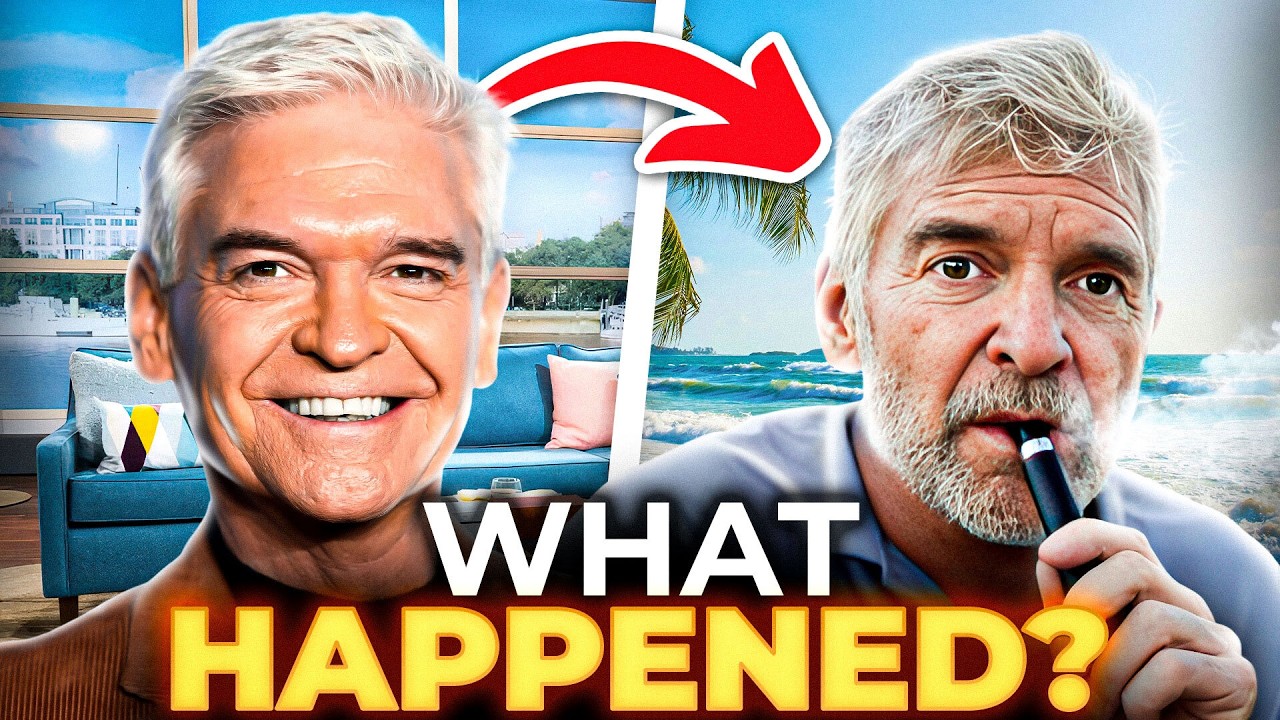
For decades, Philip Schofield was one of the most recognisable faces on British television. He wasn’t just a presenter you occasionally watched. He was a daily presence in millions of homes across the UK. Morning routines often included the kettle boiling, the television humming in the background, and Schofield calmly presenting the day’s stories.
His reputation was built on familiarity, stability, and trust. Yet in 2023 that carefully constructed image collapsed at extraordinary speed. What followed was one of the most dramatic reputational falls in modern British television.
This article explores how Philip Schofield went from ITV’s safest pair of hands to disappearing from television almost overnight, and what the story reveals about the culture of the TV industry itself.
Becoming One of Britain’s Most Trusted TV Presenters
Philip Schofield’s television career spanned more than three decades, but his most influential years came as co-host of ITV’s This Morning. Daytime television thrives on consistency, and Schofield embodied that reliability.
He wasn’t known for controversy or dramatic reinvention. Instead, he built a reputation for calm delivery, friendly conversation, and professional control of live television. Viewers felt they knew him personally, which is a powerful advantage in a format that appears five days a week, year after year.
This familiarity made him invaluable to broadcasters. Advertisers trusted him, producers relied on him, and audiences welcomed him into their homes. Over time, Schofield’s role expanded beyond the sofa.
ITV handed him increasingly prominent opportunities including major live broadcasts and prime-time entertainment shows such as The Cube. Hosting high-stakes formats requires authority and composure, qualities Schofield delivered with ease.
By this point, he had become more than just a presenter. He had become part of the ITV brand itself.
When Public Image Meets Personal Truth
In February 2020, Schofield made headlines across the UK when he publicly came out as gay. The announcement was made through a statement on social media and then discussed live on This Morning alongside his long-time co-host Holly Willoughby.
The moment was framed as deeply personal and courageous. Support flooded in from viewers, colleagues, and celebrities, many praising his honesty after decades of presenting family television while privately struggling with his identity.
Within the studio environment, the moment was carefully handled and sympathetic. However, outside the controlled setting of television, reactions were more mixed.
British media culture often responds to high-profile revelations with both support and scrutiny. Commentators and comedians began analysing the presentation of the announcement itself. Satire quickly appeared, signalling that Schofield’s once untouchable public image had begun to shift.
For the first time in years, he was no longer just a presenter. He had become a subject of discussion.
Rumours That Refused to Disappear
Once the spotlight widened, old conversations resurfaced. Within television circles, whispers had circulated for years about Schofield’s relationship with a younger colleague connected to This Morning.
According to later reports and industry accounts, Schofield had known the individual long before they began working in television. Eventually, the younger colleague secured a role within ITV.
Some former staff members claimed the closeness between the two was noticeable within the workplace. Stories circulated privately among production crews, although nothing was publicly confirmed at the time.
In environments like television production, hierarchy plays a significant role. Junior staff rarely challenge senior presenters, particularly those with enormous influence within the organisation. When a figure becomes deeply embedded within a broadcaster’s identity, questioning them can feel uncomfortable or risky.
For years, these rumours remained internal conversations rather than public accusations.
A Separate Scandal Changes the Atmosphere
In May 2023, events took a darker turn when Schofield’s younger brother was convicted of serious sexual offences involving a minor. The case shocked many observers and inevitably drew attention toward Schofield himself.
During the trial it emerged that Schofield had been informed about his brother’s behaviour two years earlier. Although he had encouraged his brother to seek professional help, he had not reported the information to police.
Legally, Schofield had not committed a crime. However, public reaction quickly turned critical. A television figure associated with family-friendly programming was suddenly facing questions about judgement and responsibility.
At the same time, reports began emerging that his relationship with Holly Willoughby had become strained behind the scenes. Their famously warm on-screen chemistry appeared increasingly distant.
The atmosphere surrounding Schofield was changing rapidly.
The Moment Everything Unravelled
The breaking point came in May 2023 when Schofield stepped down from This Morning after more than twenty years presenting the show.
The announcement was brief and controlled. There was no farewell episode, no celebratory montage, and no opportunity for a final goodbye to viewers. Instead, he simply vanished from the programme.
Soon afterwards, Schofield released a statement admitting that he had lied about having a relationship with a much younger male colleague from the show. He described the relationship as consensual but acknowledged it had been unwise.
He apologised to ITV, colleagues, friends, and his family for misleading them about the situation.
The admission had immediate consequences. Schofield resigned from ITV entirely, stepped down from hosting the British Soap Awards, and was dropped by his talent agency.
Within days, a career spanning decades had effectively ended.
When the Industry Begins to Speak
Once Schofield stepped away from television, former colleagues began speaking more openly about the culture surrounding This Morning and ITV.
Some broadcasters suggested that concerns about Schofield had circulated internally for years but were never fully addressed. Others questioned whether investigations conducted by ITV relied too heavily on the assurances of those involved.
ITV stated that previous inquiries had been carried out and that both Schofield and the colleague had denied any inappropriate relationship at the time.
Nevertheless, the controversy sparked a wider debate about power dynamics within television workplaces. When senior presenters become essential to a broadcaster’s success, challenging them can become increasingly difficult.
This raised uncomfortable questions about whether the issue was solely about Schofield or about a broader industry culture.
Life After Television
Following his resignation from ITV, Schofield largely disappeared from mainstream broadcasting. His brief reappearance came through the survival series Cast Away, which portrayed him living alone on an island while reflecting on his career and the events that led to his departure.
It was a stark contrast to the brightly lit studio sets that had defined his public life.
Meanwhile, television moved forward. New presenters replaced him on This Morning, and the programme continued as usual. In the fast-moving world of broadcast media, even long-standing stars can be replaced quickly.
What the Philip Schofield Story Reveals
The downfall of Philip Schofield did not happen because of a single headline. Instead, it resulted from multiple issues colliding at once.
Rumours that had circulated privately for years suddenly became public knowledge. Personal decisions came under scrutiny. Trust within the workplace appeared to fracture. Once the protective layer surrounding a major television personality disappears, events can escalate rapidly.
More broadly, the story highlights how familiarity and long-term success can sometimes shield powerful figures from scrutiny. In industries built on reputation and audience loyalty, questioning established personalities is rarely easy.
By the time those questions finally emerge in public, the damage is often already done.
Philip Schofield’s career was built over decades, but its ending came with surprising speed. In British television, departures rarely come with dramatic final chapters. More often they arrive quietly, replaced by the next presenter and the next programme.
And eventually, the industry moves on.