
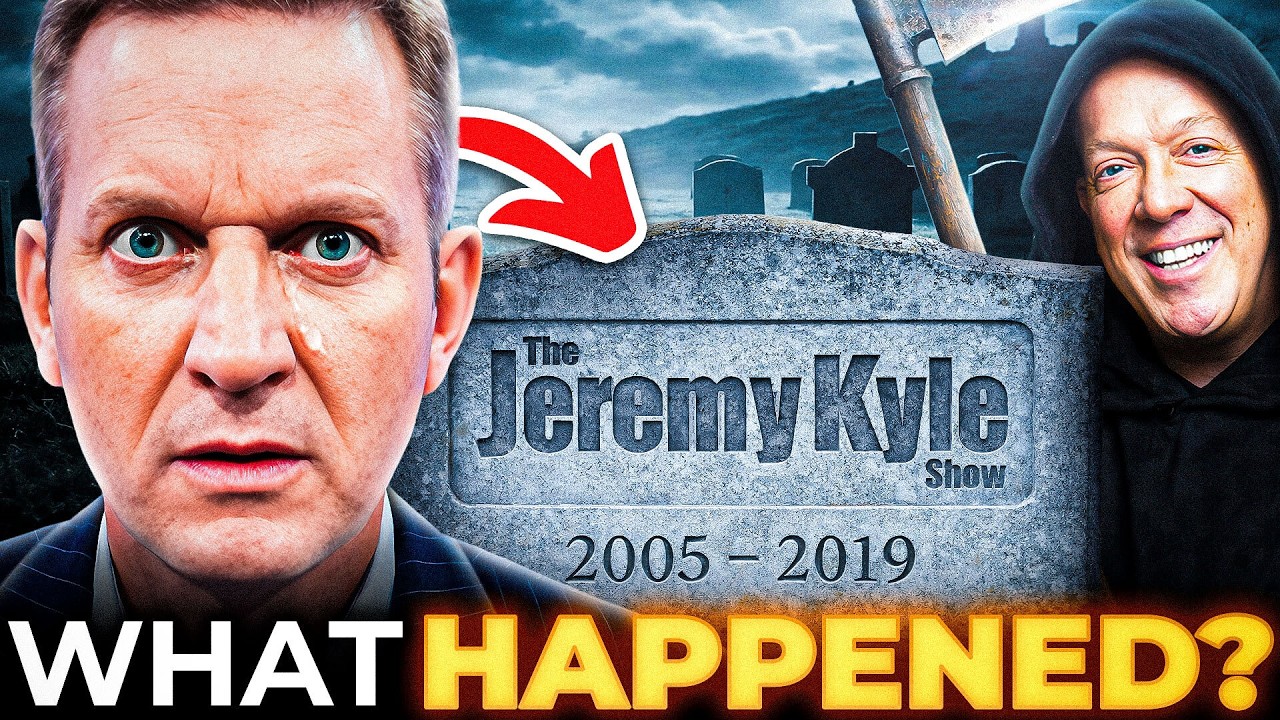
For more than a decade, The Jeremy Kyle Show dominated British daytime television, attracting millions of viewers who tuned in every weekday lunchtime to watch explosive confrontations, emotional breakdowns and shocking revelations unfold in front of a studio audience.
At the time, it felt like just another piece of daytime entertainment, something people could casually watch while eating lunch or flick past while scrolling through channels. Guests argued, accusations were thrown back and forth, lie detector tests were revealed dramatically, and relationships either collapsed or were supposedly repaired in front of millions watching at home.
Yet looking back now, many people see the programme very differently and have begun asking a difficult question that was rarely discussed during its peak years: was The Jeremy Kyle Show simply entertainment, or was it something far darker hiding in plain sight?
The Rise of The Jeremy Kyle Show
When The Jeremy Kyle Show first launched in 2005 on ITV, it quickly carved out a unique place in British television by focusing on the personal conflicts of ordinary people rather than celebrity gossip or scripted drama.
The show centred around guests who were dealing with serious and often deeply personal problems in their lives, including relationship breakdowns, accusations of cheating, paternity disputes, family feuds, addiction issues and long-standing arguments that had been building for years.
Each episode followed a carefully structured format that was designed to maximise tension and emotional impact, beginning with the introduction of the conflict before gradually escalating the confrontation between guests until the programme reached its dramatic climax when DNA results or lie detector tests were revealed.
For viewers watching at home, this formula proved incredibly compelling because it combined real human emotion with the suspense of a televised reveal, creating a kind of addictive drama that kept audiences coming back day after day.
However, behind the emotional confrontations and dramatic reactions was a format that was meticulously engineered to deliver high-impact television, ensuring that every episode built toward a moment of judgement that would leave viewers talking.
Jeremy Kyle: The Man in the Chair
At the centre of the programme stood Jeremy Kyle, the sharply dressed host who became synonymous with the show and whose authoritative presence helped shape its tone and direction.
Before entering television, Kyle had built his reputation in radio by hosting phone-in programmes that invited callers to share their personal problems, often discussing deeply private issues with someone they had never met before but who was willing to challenge them directly.
This background helped him develop a style that blended confrontation with control, allowing him to guide difficult conversations while maintaining the sense that he was delivering honesty rather than sympathy.
During episodes of The Jeremy Kyle Show, Kyle frequently acted as both host and judge, stepping in to question guests directly, challenge their explanations and steer conversations toward the moments that would produce the strongest reactions from the audience.
He controlled the rhythm of the room by deciding who could speak, when an argument had gone too far, and when it was time to push a question further in search of a dramatic answer.
What made Kyle particularly effective in this environment was that he rarely needed to raise his voice for long, because his authority came from certainty and confidence, meaning that when he stepped into a conversation the entire atmosphere of the studio shifted.
Once the audience reacted, whether through cheers, boos or shocked silence, the moment took on a momentum of its own and the confrontation moved forward in a way that could not easily be reversed.
The Guests Behind the Drama
Unlike many other television programmes, The Jeremy Kyle Show did not rely on celebrities or media-trained personalities who understood how to perform in front of cameras, but instead focused on ordinary members of the public who were often dealing with complicated and painful situations in their personal lives.
Many of the guests who appeared on the programme came from difficult circumstances and were searching for answers to problems that had already caused serious strain in their relationships.
Issues such as accusations of infidelity, uncertainty about paternity, family arguments and trust breakdowns had often been developing for months or even years before the individuals involved decided to take their situation onto national television.
For many participants, appearing on the show felt like a practical solution rather than a spectacle, because the programme offered something that might otherwise be out of reach.
DNA tests can be expensive, professional counselling costs money, and taking time away from work to resolve personal disputes is not always possible for people already under financial pressure.
The show covered travel expenses and testing costs, which meant that guests could receive answers without paying for them themselves.
However, once filming began, the environment changed dramatically because deeply complex personal situations that had developed slowly over time were compressed into short segments designed for television.
Nuance often disappeared as the programme focused on delivering a clear narrative in which someone had to be right and someone else had to be wrong.
The Dramatic Reveal: DNA and Lie Detector Tests
Every episode of The Jeremy Kyle Show was structured around a moment that viewers had learned to anticipate: the reveal of the results.
These results typically came in the form of either DNA testing or lie detector tests, both of which played a central role in determining how the story would end.
DNA tests were usually used in paternity disputes where the question of whether a man was the father of a child needed to be resolved, and because DNA testing is widely regarded as reliable scientific evidence, these results often carried significant emotional weight.
Lie detector tests, however, were far more controversial because polygraph machines do not actually detect lies but instead measure physiological responses such as heart rate, breathing patterns and perspiration.
These reactions may indicate stress or anxiety, but they cannot conclusively determine whether someone is telling the truth, which is why many courts and legal systems refuse to accept polygraph results as reliable evidence.
Despite this uncertainty, lie detector results on The Jeremy Kyle Show were presented as clear and final judgements, often delivered dramatically in front of the studio audience.
When the envelope was opened and the result was read aloud, the reaction was immediate and intense, with gasps, cheers or accusations erupting across the studio floor.
In some cases, relationships ended within seconds as partners stormed off stage or confronted each other in anger, while reputations could be permanently damaged by a single line read aloud in front of millions of viewers.
Life After the Cameras
Although the episode ended when the credits rolled, the experience did not end for the guests who had appeared on the programme.
Many former participants later described the complicated aftermath of their appearances, explaining that while some felt relief after confronting their problems publicly, others felt exposed, embarrassed or overwhelmed by the sudden attention that followed.
One of the biggest challenges was the permanence of television and the internet, because once a dramatic moment had been broadcast it could easily be shared online, replayed repeatedly or turned into viral clips on social media.
Guests reported being recognised in public places, confronted by strangers who had seen their arguments on television, and in some cases even losing employment opportunities because of the way they had been portrayed on the programme.
For some individuals, the consequences of appearing on the show continued long after the audience had moved on to the next episode.
The Case That Changed Everything
For many years, The Jeremy Kyle Show continued broadcasting despite ongoing criticism about its format and the treatment of its guests.
However, in 2019, a single case changed the conversation completely.
A man named Steve Diamond appeared on the programme to address accusations that he had cheated on his partner, and he agreed to take a lie detector test in order to prove that he was telling the truth.
When the results were revealed on the show, the test indicated that he had failed, even though Diamond insisted the result was incorrect and appeared genuinely confused by the outcome.
Just days after the recording of the episode, he was found dead from a morphine overdose, and he left a note blaming the programme.
The news spread quickly across the UK and sparked widespread debate about the ethical responsibilities of reality television producers when dealing with vulnerable participants.
For the first time, the national conversation shifted away from whether the show was simply controversial or tasteless, and instead focused on whether programmes like this should exist at all.
The End of The Jeremy Kyle Show
Following the news of Steve Diamond’s death, ITV announced the immediate cancellation of The Jeremy Kyle Show, bringing an abrupt end to a programme that had been part of British daytime television for 14 years.
Episodes were removed from broadcast schedules and quietly taken down from online platforms while investigations examined the production practices behind the scenes.
Reports and documentaries later raised questions about how guests were prepared for the show, how confrontations were managed during filming, and whether enough support was provided once participants returned to their everyday lives.
Although a coroner later ruled that there was no direct causal link between Diamond’s appearance on the programme and his death, the cultural shift had already taken place.
Public attitudes toward the format had changed so dramatically that the show could no longer continue in the same way.
Why the Show Lasted So Long
Looking back, many people now wonder why The Jeremy Kyle Show remained on air for so many years despite the controversies that surrounded it.
Part of the explanation lies in the fact that the programme delivered strong ratings and became a familiar part of the daytime television schedule, meaning that it consistently attracted viewers who were curious to see the latest dramatic confrontation.
However, another reason may be more uncomfortable to acknowledge, because the format allowed audiences to feel involved in judging real people’s lives without ever facing the consequences themselves.
From the comfort of their living rooms, viewers could watch strangers argue, take sides in conflicts and decide who they believed was telling the truth.
For a long time, that dynamic felt harmless.
But once the conversation shifted toward what happened to the participants after the cameras stopped rolling, the entire format began to look very different.
The Legacy of The Jeremy Kyle Show
When The Jeremy Kyle Show disappeared from television in 2019, it left behind a complicated legacy that still shapes discussions about reality television in Britain today.
For some viewers, the programme remains a memorable part of daytime entertainment that provided dramatic and unpredictable television.
For others, it represents a troubling period in which private struggles were transformed into public spectacle for the sake of ratings.
More than anything, the rise and fall of the show forced broadcasters and audiences alike to confront a difficult question about the nature of modern television.
At what point does entertainment cross the line into exploitation?
And once that line is crossed, can a format like this ever truly return?