
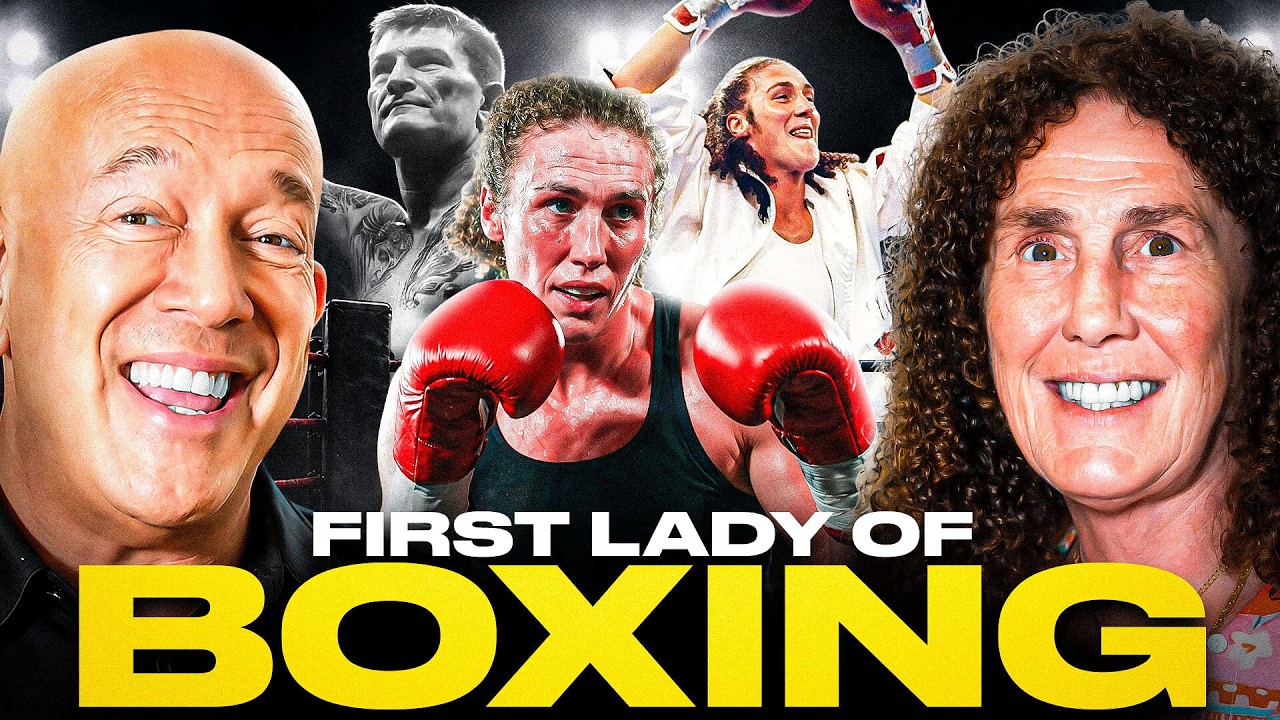
Jane Couch MBE is one of the most important figures in the history of British boxing. A five-time world champion, International Boxing Hall of Fame inductee and true pioneer of women’s professional boxing, Couch did far more than win fights inside the ring.
She fought for the legal right of women to box professionally in Britain.
Appearing on The Terry Stone Connection podcast, Couch reflected on her remarkable journey from growing up in Fleetwood to becoming a world champion and taking on the British Boxing Board of Control. She also shared memories of her friendship with Ricky Hatton, her early appearances on unlicensed boxing shows and the personal sacrifices required to change the sport forever.
Growing Up in Fleetwood
Jane Couch was born and raised in Fleetwood, a fishing town near Blackpool in Lancashire.
Life in Fleetwood was shaped by traditional working-class roles. Many of the men went to sea, while women were generally expected to remain at home and look after their families. Couch, however, never felt comfortable following the path that had been laid out for her.
Her brother played drums in the punk band One Way System, and Couch grew up surrounded by the punk scene. As a child, she would help protect the band’s equipment during unofficial gigs, removing troublemakers from the stage and acting as a lookout when the police arrived.
Those early experiences helped develop the toughness and determination that would later define her boxing career.
Couch left school at around 14 and began working to help bring money into the family home. She was not particularly interested in music, but she knew she could fight. That ability eventually gave her a direction.
Discovering Women’s Boxing
When Couch was around 20, she watched a documentary about women boxing professionally in America.
The programme introduced her to a world that she had not realised existed. Female fighters such as Christy Martin and Lucia Rijker were competing professionally, yet women in Britain were not allowed to do the same.
Couch returned to Fleetwood and asked her local boxing gym to train her. Initially, she was told that women could not box and that she would have to travel to America if she wanted to compete.
She refused to accept that answer.
Couch began training alongside male fighters, but the negative attention surrounding women’s boxing made it difficult for her to develop openly. She later moved to a remote training camp near Bristol, where fighters including Frank Bruno and Lennox Lewis had trained.
The isolated location allowed her to practise away from the criticism and controversy surrounding her ambitions.
Becoming a World Champion
Couch began her career by competing in unlicensed bouts.
These events offered few of the protections available in professional boxing. Fighters would often arrive, weigh in and face whoever happened to be available. Medical checks were limited, and many of the competitors had very little formal training.
After only four unlicensed fights, Couch was offered a world title opportunity in Denmark.
Despite facing a more experienced opponent, she won the fight and became a world champion. It was a defining moment, but it also raised an obvious question.
How could a British boxer become a world champion overseas while being prevented from competing professionally in her own country?
Taking on the British Boxing Board of Control
Following another fight in New Orleans, Couch returned to Britain and explained during a television interview that she could not box legally in England.
A solicitor named Sarah Leslie saw the interview and contacted her.
Rather than focusing solely on sex discrimination, the legal challenge was built around restraint of trade. Couch was already earning a living and competing professionally overseas, yet she was being prevented from pursuing the same career in Britain.
The case was expensive, difficult and fiercely opposed by figures within the boxing establishment.
At the time, the British Boxing Board of Control was dominated by traditional attitudes. Couch recalled encountering officials who firmly believed women should never be allowed to enter a professional boxing ring.
However, she continued fighting the case and ultimately succeeded.
Her victory opened the door for women to receive professional boxing licences in Britain.
Britain’s First Professional Women’s Boxing Match
Winning the legal battle did not immediately make Couch accepted within the sport.
Many established promoters still refused to include her on their shows. Eventually, figures associated with London’s underworld agreed to promote her fights.
Couch competed in what became Britain’s first professional women’s boxing contest at Caesar’s Palace in Streatham, South London.
The venue may have shared a name with the famous Las Vegas resort, but the surroundings were very different. It was a rough, lively boxing environment attended by celebrities, boxing fans and notorious figures from London’s criminal underworld.
Although unconventional, these promoters gave Couch an opportunity when much of the traditional boxing establishment would not.
Five-Time World Champion
Couch went on to compete around the world, travelling to countries including America, Germany, Denmark and Jamaica.
She fought 39 times during an era when female boxers struggled to secure opportunities.
Among the defining moments of her career was her victory over Sandra Geiger in Denmark, which earned her a world title. She also faced the legendary Lucia Rijker in Los Angeles after accepting the fight at only ten days’ notice.
That contest took place on the same bill as Lennox Lewis against Vitali Klitschko, placing Couch on one of boxing’s biggest stages.
Although Couch described herself as more of a fighter than a technically perfect boxer, her toughness was unquestionable. Training and sparring with men prepared her for the intensity of professional competition.
She eventually became a five-time world champion, achieving far more than she had imagined when she first entered a boxing gym.
Friendship With Ricky Hatton
A major part of Couch’s podcast appearance focused on her friendship with Ricky Hatton.
Couch explained that Hatton was one of the few influential figures in British boxing who supported her during the early stages of her career. Although he could not always speak publicly because of his position within the sport, he encouraged her to continue challenging the system.
Their friendship lasted for decades.
Both fighters received MBEs and were later inducted into the International Boxing Hall of Fame together. Couch described the induction as one of the greatest honours available to any boxer.
She also spoke movingly about supporting Hatton during the ceremony and reflected on the importance of providing better guidance and emotional support for athletes dealing with fame, retirement and personal difficulties.
Jane Couch’s Lasting Legacy
Jane Couch retired from boxing in 2012, but her impact continues to shape the sport.
Today, British female fighters can headline major events, compete for world titles and build successful professional careers. Those opportunities exist partly because Couch challenged the rules that prevented women from boxing professionally.
Her achievements have been recognised with an MBE and induction into the International Boxing Hall of Fame.
She has also written a book, The Final Round, which tells the story of her life and career. Discussions have taken place about turning her story into a film, a fitting next chapter for one of British boxing’s most remarkable journeys.
Now living back in Fleetwood, Couch remains involved in her local community and boxing scene. She is also working with a group hoping to redevelop the town’s former pier site.
Her story is not simply about boxing.
It is about persistence, working-class determination and refusing to accept that something is impossible simply because it has never been done before.
Jane Couch did not just become a champion. She changed British boxing forever.