
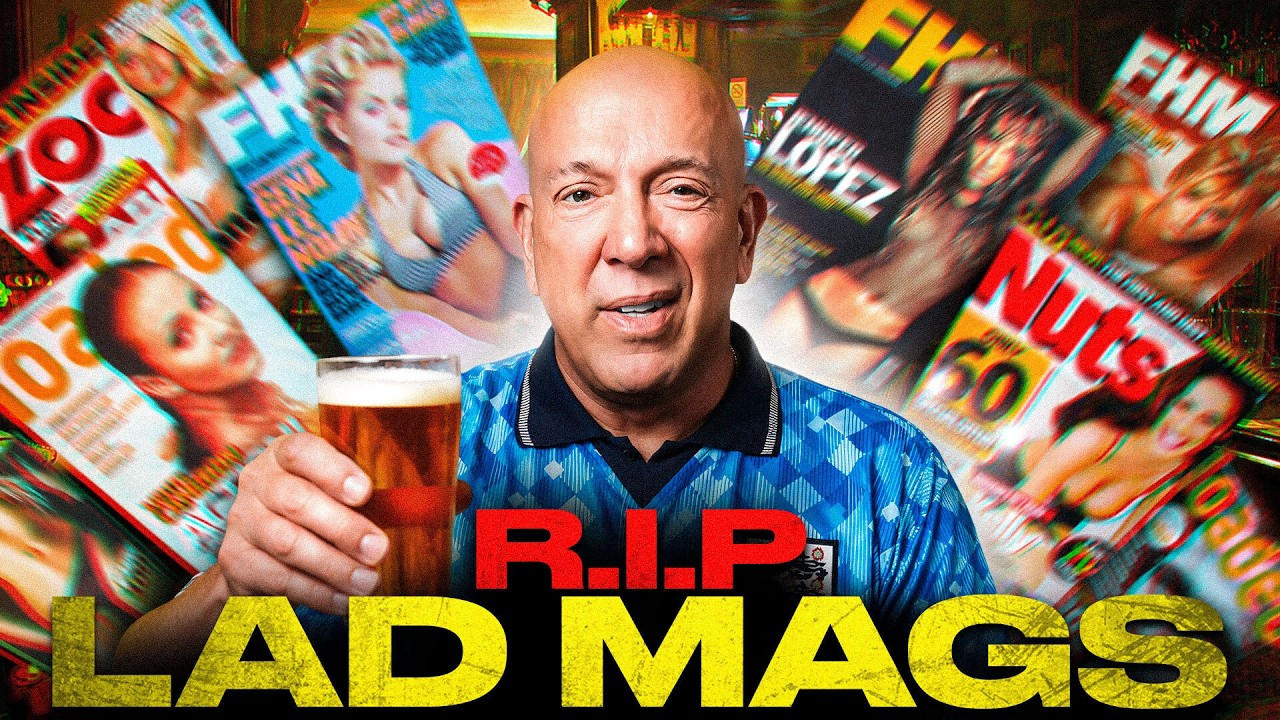
There was a time when walking into a British newsagent meant being greeted by an unmistakable wall of magazines. Alongside the newspapers, sweets and drinks were titles such as Loaded, FHM, Nuts and Zoo, often featuring celebrities, football stories and provocative headlines.
For more than a decade, these magazines were not simply something people picked up for a quick read. They became part of British popular culture, influencing humour, fashion, nightlife and attitudes among a generation of young men. At their height, some were selling hundreds of thousands of copies every month.
Then, almost as quickly as they had taken over the shelves, they disappeared.
So, what caused the rise and fall of lads mags in Britain, and why did titles that once seemed unstoppable struggle to survive?
Where Did Lads Mags Begin?
To understand the success of lads mags, you have to go back to Britain in the 1990s.
There were no smartphones, Instagram or TikTok. If you wanted celebrity interviews, photographs, music features or entertainment news, magazines were one of the main places to find them. They occupied prime positions in WHSmith stores, petrol stations and local newsagents across the country.
Then came Loaded.
Launching during the 1990s, Loaded felt completely different from the traditional men’s magazines that had come before it. Its famous approach was aimed at “men who should know better”, capturing exactly what the publication was trying to represent.
Football, music, drinking, nightlife and irreverent humour were all mixed together in a magazine that felt as though it genuinely understood the audience reading it.
Importantly, early Loaded was not simply about provocative photographs. It featured substantial journalism and gained access to some of the biggest names in British music, including artists at the centre of the Britpop explosion.
For young men who felt ignored by traditional media, it felt like something created specifically for them.
Britpop, Football and the Perfect Cultural Moment
The timing could hardly have been better.
Britain during the mid and late 1990s was experiencing a huge cultural shift. Britpop was everywhere, Euro 96 had created renewed excitement around football, pubs and beer gardens were packed and British nightlife was booming.
Clubs such as Ministry of Sound, Cream and Gatecrasher became major parts of youth culture.
Lads mags tapped directly into this atmosphere.
Loaded reportedly reached around 450,000 copies per month at its peak, while FHM pushed even further, approaching 800,000 copies.
FHM helped take the formula mainstream. It was slicker, more polished and filled with increasingly recognisable celebrity names.
Suddenly, lads mags were no longer a niche corner of publishing. They were part of everyday British culture.
When Lads Mags Became a Competition
Success inevitably attracted competition.
Publishers had discovered an audience willing to spend money, and every magazine wanted a bigger share of it. Covers became more attention grabbing, celebrity features became more important and the battle for visibility on the shelves intensified.
Features such as FHM’s annual 100 Sexiest Women list became mainstream talking points rather than something discussed only by magazine readers. Rankings were debated in workplaces, pubs and even wider media.
The problem was that each new issue had to attract more attention than the previous one.
That gradually changed the tone.
What had begun as a mixture of clever writing, music, sport and rebellious humour increasingly relied on provocative covers and celebrity imagery to sell copies.
The formula was working, but it was also becoming harder to escalate.
Nuts and Zoo Take Lads Mags Weekly
By the mid 2000s, another major shift had taken place.
Nuts and Zoo transformed the monthly lads mag formula into something readers could buy every week.
Nuts reached around 300,000 copies per week at its peak, while Zoo competed for much the same audience.
The pace changed everything.
Instead of sitting down with one magazine for a longer read, the experience increasingly became about quick jokes, football stories, celebrity features and eye catching images.
Read it, laugh at it, then buy another one the following week.
The magazines became faster and more disposable, but this also meant they constantly needed new ways to attract attention.
Eventually, there was only so far the format could go.
British Attitudes Were Starting to Change
At the same time, wider attitudes were changing.
Lads mags had once sat openly at eye level in supermarkets, petrol stations and newsagents. As complaints about their covers increased, some retailers moved them higher on shelves or placed modesty covers over them.
That presented a serious problem.
These publications relied heavily on visibility. A striking front cover needed to catch someone’s attention as they walked past.
Once that visibility was reduced, one of their most powerful marketing tools disappeared.
There were also broader cultural changes happening across Britain. The atmosphere of the 1990s and early 2000s was evolving, while the humour and attitudes associated with lads mags increasingly came under scrutiny.
However, changing attitudes alone did not kill the industry.
Something much bigger was coming.
The Internet Changed Everything
The biggest reason for the decline of lads mags was remarkably simple: the internet replaced much of what they offered.
Previously, if someone wanted an exclusive celebrity interview, photoshoot, football story or entertainment gossip, buying a magazine made sense.
Once the same type of content became available instantly online, paying for a weekly or monthly magazine became increasingly difficult to justify.
Then social media accelerated the change.
Celebrities no longer needed a magazine to communicate directly with an audience. Platforms such as Instagram and Twitter allowed them to publish photographs, opinions and updates themselves whenever they wanted.
There was no need to wait for next month’s exclusive interview.
Everything was available immediately.
As smartphones became universal, consumer habits changed with them. People increasingly scrolled rather than sat down to read magazines. Content became quicker, cheaper and constantly available.
As the transcript puts it, lads mags were no longer competing with other magazines. They were competing with the entire internet.
That was a battle print publishing was never realistically going to win.
The Legacy of British Lads Mag Culture
Looking back, the lads mag era remains a fascinating snapshot of British culture.
Loaded, FHM, Nuts and Zoo reflected a particular period shaped by Britpop, football, pubs, nightlife and celebrity culture. At their best, they combined strong journalism with humour and entertainment that genuinely connected with their audience.
At their worst, the constant battle for attention pushed the format towards increasingly provocative content that has aged far less comfortably.
Their disappearance was not caused by one campaign, one cultural change or one controversial cover.
Technology changed the way people consumed entertainment.
The magazines did not simply fall out of fashion. Much of what they provided was absorbed by websites, social media and smartphones.
The titles may have disappeared from Britain’s newsagent shelves, but the style of fast entertainment, celebrity gossip, sport, humour and attention grabbing content they helped popularise is still everywhere.
It just lives on a screen instead.